
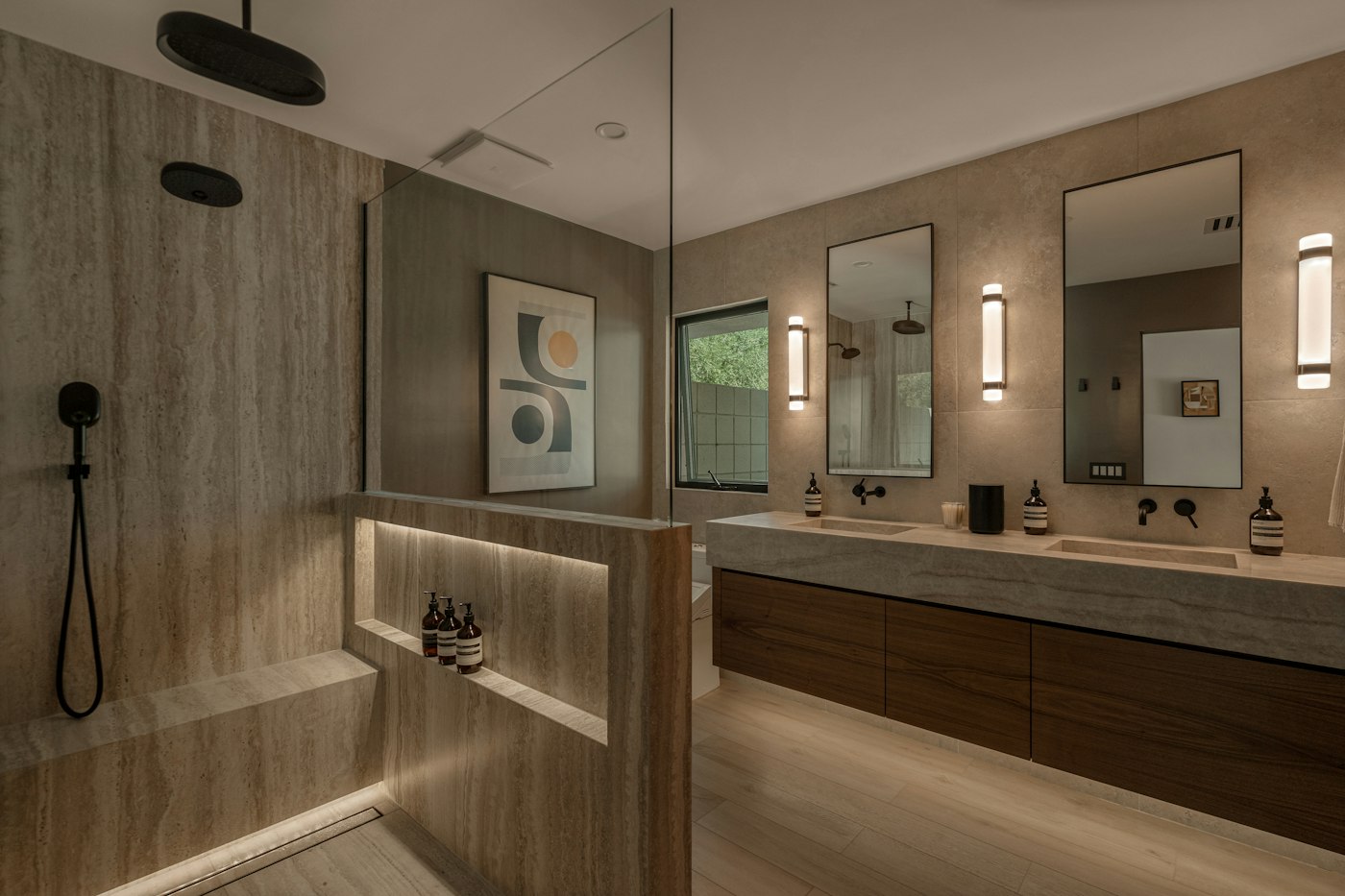
When snow is on the ground or the days are short and gray, outdoor projects mostly wait. Indoor work does not have to. A bathroom is one of the most natural winter remodeling projects, because the work is contained in one room and does not depend on the weather the way a deck or a roof does.
Why Bathrooms Suit Winter
A bathroom is a compact space with a clear scope: fixtures, plumbing, ventilation, tile, lighting, storage and finishes. Most of the work happens inside the walls and on the floor of a single room. Winter is also when many households notice their bathroom’s shortcomings most, such as a fan that cannot keep up with steam, a cold tile floor or a drafty window over the tub.
Plan for Life With One Less Bathroom
The biggest adjustment is usually practical. If you have more than one bathroom, map out who will use which room and when, especially on busy mornings. If the bathroom being remodeled is your only one, talk with your contractor early about how the work can be scheduled so you have access to a working toilet as much as possible. Some families arrange to shower at a gym, with relatives or at a neighbor’s house during the busiest phase.
- Clear out the bathroom completely before work begins, including the linen closet.
- Set up a temporary toiletry station in a bedroom or hallway.
- Plan where tools and materials can be staged without blocking hallways.
Protecting the Rest of the House in Winter
Winter work means doors open and close while the heat is running, and crews track in snow, salt and mud. Ask how floors along the work path will be protected and how dust will be contained. Plastic sheeting, zip-up dust doors and floor protection are common approaches. Changing your furnace filter after a dusty phase is a good habit. If a window is being replaced, ask how the opening will be protected from cold air while it is out.
Use the Season to Fix Winter Problems
A winter remodel is a great chance to solve the problems you feel most in cold weather. Consider these upgrades as you plan:
- Ventilation: A properly sized exhaust fan, ducted to the outside, helps control the condensation that builds up when cold surfaces meet warm, moist air.
- Floor warmth: Electric radiant floor heating under tile can make a bathroom far more comfortable on cold mornings.
- Insulation: If exterior walls are opened up, it is a good time to look at insulation and air sealing.
- Lighting: Short winter days make good vanity lighting even more important.
Keep Decisions Ahead of the Work
The smoothest projects are the ones where tile, fixtures, vanity, mirror, lighting and hardware are chosen before demolition starts. Special-order items can take time to arrive, and waiting on a single faucet or a box of tile can stall an otherwise steady project. Make a list of every finish the room needs and check items off as you choose them.
A winter bathroom remodel can leave you with a warmer, brighter, better-ventilated room just as the season turns. If you are considering one, reach out through our contact page to start planning.
A Typical Bathroom Remodel Sequence
Knowing the order of work helps you plan your household routine and understand why certain decisions must be made early. While every project is different, most full bathroom remodels follow a similar path.
- Protection and demolition. Floors and hallways are covered, dust barriers go up and the old fixtures, tile and finishes come out.
- Discovery and repair. With walls and floors open, any water damage, rot or outdated wiring and plumbing becomes visible and can be addressed.
- Rough-in work. Plumbing supply and drain lines, electrical boxes, fan ducting and blocking for grab bars, towel bars and vanities are installed. Where permits are required, inspections often happen at this stage.
- Insulation, backer board and waterproofing. Exterior walls may get insulation and air sealing, then cement board or similar backer goes up, and shower areas receive a waterproofing membrane.
- Tile. Floor and wall tile are set, then grouted after the setting materials cure.
- Paint, vanity and fixtures. Walls are painted, the vanity and countertop are installed, and the toilet, faucets, shower trim, lighting and fan grille go in.
- Glass, mirrors and accessories. Shower glass is typically measured after tile is complete, then installed along with mirrors and hardware.
- Final walk-through. Everything is tested and any punch-list items are completed.
Winter-Specific Details to Talk Through
Cure times and temperature
Thin-set mortar, grout, waterproofing products and paint all have temperature and humidity ranges for proper curing. Keeping the home heated steadily during the project helps these products perform as intended, so avoid turning the heat way down to save energy in the room being remodeled.
Water shutoffs
Plumbing work sometimes requires shutting off water to part or all of the house. Ask when this will happen so you can fill a few jugs, run the dishwasher ahead of time and plan around it.
Exterior walls and pipes
If plumbing runs in an exterior wall, a remodel is a chance to evaluate whether those pipes are protected from freezing. Insulating properly, or relocating lines where practical, can prevent future problems.
Deliveries in bad weather
Keep the driveway and walkway clear of snow and ice on delivery days so heavy items like vanities, tubs and tile can be brought in safely.
Your Pre-Demolition Checklist
- Every finish chosen and either delivered or confirmed with a delivery date
- Vanity, toilet, tub or shower base and faucets on hand or on schedule
- Tile quantities ordered with extra for cuts and future repairs
- Exhaust fan, lighting fixtures and mirror selected
- Towel bars, hooks, paper holder and grab bar locations marked on the plan
- A plan for daily bathroom access for every family member
- Valuables, artwork and fragile items moved away from the work path
- Pets settled in a room away from the work area
Common Questions About Winter Bathroom Projects
Will my house get cold with doors opening? There will be some coming and going, especially on delivery and demolition days, but good containment and keeping doors closed between trips limit heat loss.
Can I use the bathroom between work days? It depends on the stage. Ask your contractor which phases leave the room unusable so you can plan.
Should I add radiant heat if I’m on a budget? Floor warming is easiest to add while the floor is open. If you are unsure, ask about running the wiring or planning the circuit now so the option stays open.


