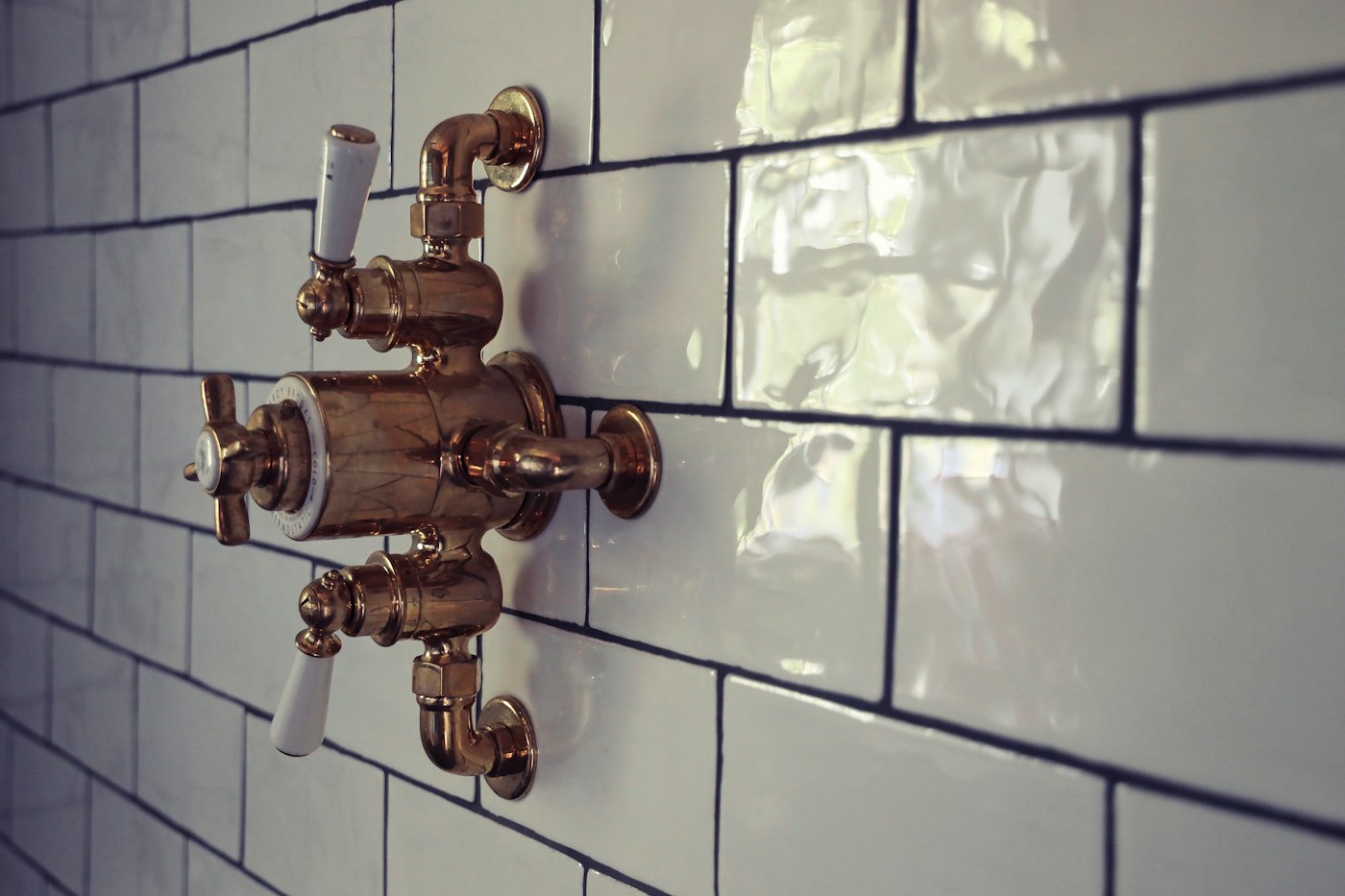
When people plan a new shower, they focus on what they can see: the tile, the glass, the showerhead and the handle. The part that shapes the experience most is hidden in the wall. The shower valve controls how hot and cold water mix, how steady the temperature stays and whether you can run more than one spray at once. Understanding the main valve types makes it easier to choose the right one before the walls are closed.
What a shower valve does
A shower valve receives the hot and cold supply lines, blends them to the temperature you choose and sends the mixed water to the showerhead, tub spout or other outlets. Modern valves also guard against sudden temperature swings. Plumbing codes in most areas require shower valves with scald protection, which is why both of the common types include it in some form.
Pressure-balance valves
A pressure-balance valve responds to changes in water pressure. If someone flushes a toilet and the cold-water pressure drops, the valve quickly cuts back the hot side to keep the mix in balance. That prevents the jolt of scalding or icy water that older showers were known for.
Most pressure-balance valves use a single handle that controls temperature, often turning from off through warm to hot at a fixed flow. They are reliable, widely available and affordable, and they suit most standard showers with one showerhead, or a showerhead and a tub spout.
Thermostatic valves
A thermostatic valve senses the temperature of the mixed water itself and adjusts the blend to hold your setting, regardless of pressure changes. Many have one control for temperature and a separate control or controls for volume, so you can set a preferred temperature once and simply turn the water on and off.
Thermostatic valves typically handle higher flow, which makes them the usual choice for showers with several outlets, such as a rain head, a handheld and body sprays. They cost more and are more involved to install, but they deliver the most consistent and customizable shower.
Diverters and multiple outlets
To run more than one outlet, a shower needs a diverter or separate volume controls. A two-way diverter switches between two outlets, such as a fixed head and a handheld. Three-way and more elaborate diverters allow other combinations, sometimes including two outlets at once.
- Plan where each outlet goes before framing is finished, including blocking for a slide bar or handheld holder.
- Make sure the water heater and supply lines can keep up with several outlets running together.
- Confirm that the drain can handle the combined flow.
Matching valve and trim
A valve and its visible trim, the handle and faceplate, are usually designed to work together within one manufacturer’s line. Choosing the valve body early, before the wall is closed, keeps trim options open and avoids discovering that a favorite handle does not fit the valve behind the tile. Many valve bodies accept several trim styles, which makes future updates easier. A plumber can recommend the right valve for your layout and confirm what local code requires. It is a small decision with a big effect on every shower that follows.
Choosing a Valve: A Practical Decision Guide
Most homeowners can narrow the choice by answering a few questions about how the shower will be used.
- How many outlets will run at once? One showerhead, or a showerhead and tub spout, is well served by a pressure-balance valve. Several outlets running together usually point toward a thermostatic system.
- Do you want to set the temperature once? If household members like stepping in and turning on water at a familiar temperature, a thermostatic valve with separate volume control delivers that.
- Who uses the shower? Young children and older adults benefit from steady temperatures and controls that are simple to understand. Many thermostatic valves also offer a temperature limit or a safety button that must be pressed to go hotter.
- What is the budget for the whole project? A thermostatic system often means more valves, more outlets and more labor. If the budget is tight, a good pressure-balance valve with a quality showerhead is a solid result.
- How easy is access later? Consider how the valve can be reached for service. Some walls allow an access panel from the room behind.
Planning a Multi-Outlet Shower Step by Step
- Decide on the outlets. List each spray you want: fixed head, rain head, handheld, body sprays or a tub filler.
- Choose how they will be controlled. A diverter, separate volume controls or a combination, depending on which outlets should run together.
- Check flow requirements. Each outlet has a flow rating. Add up the outlets you plan to run together and confirm with your plumber that supply lines, the valve and the water heater can keep up.
- Lay out heights and locations. Place controls where they can be reached from outside the spray, so you can turn on the water and wait for it to warm without getting soaked. Set showerhead heights for the tallest regular user, and put the handheld where it can be reached by someone seated.
- Add blocking. Wood blocking in the wall supports slide bars, grab bars, handheld holders and any built-in seat.
- Confirm the drain. A multi-outlet shower may need a larger drain or a linear drain to handle the combined flow.
- Test before tile. Plumbing should be pressure-tested and the valve checked before the walls are closed.
Common Mistakes With Shower Valves
- Setting the valve at the wrong depth. Each valve body has a range for how deep it sits in the wall relative to the finished tile. Too deep or too shallow and the trim will not fit properly.
- Buying the trim and valve from different lines. They often are not interchangeable.
- Forgetting the mixing limit. Many pressure-balance valves have an adjustable stop that limits how hot the water can get. It should be set after installation.
- Placing controls under the showerhead. Reaching through cold water to turn on the shower is an everyday annoyance.
Questions Readers Ask
Can I upgrade my valve without retiling?
Sometimes, especially if there is access from behind the wall or the new valve fits the existing opening. Some manufacturers make retrofit options. Otherwise, some tile usually has to come out.
Why does my shower take so long to get hot?
That is usually the distance between the water heater and the shower, not the valve. Options include insulating pipes or a recirculation system, which a plumber can discuss.
My handle drips when the shower is off. Does the whole valve need replacing?
Often only the cartridge or seals need replacement. A plumber can tell you whether parts are available for your valve.