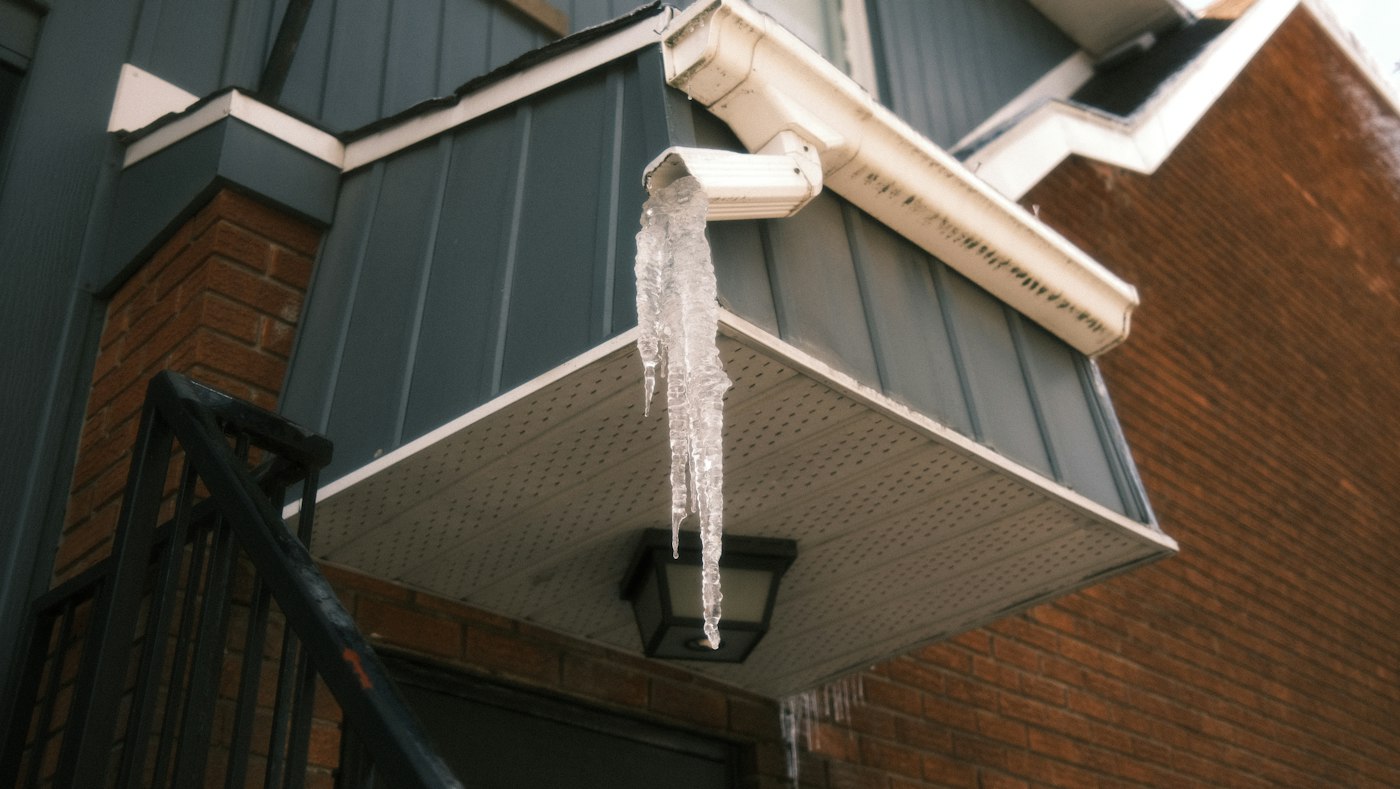
Ice dams are a winter problem with a fall solution. They are those thick ridges of ice that build up along the edge of a roof, sometimes trailing icicles, and they can push water back under shingles and into ceilings and walls. The key thing to understand is where they start: ice dams come from warm attics; insulate and ventilate in fall. By the time you see one, the conditions that caused it are already in place. Here is how ice dams form, why the attic is the real culprit and the steps to take now, before the cold weather arrives.
How an Ice Dam Forms
An ice dam needs three things: snow on the roof, a roof surface warm enough to melt it and cold roof edges where the meltwater refreezes.
- Heat escapes into the attic from the living space below through gaps and thin insulation.
- The attic warms the roof deck, and snow on the upper roof melts even when outside temperatures are below freezing.
- Meltwater runs down the roof to the eaves, which overhang the exterior walls and stay cold because there is no heated space beneath them.
- The water refreezes at the edge, forming a ridge of ice.
- More meltwater backs up behind the ridge, pooling on the roof. Shingles are designed to shed water downhill, not hold standing water, so it can work its way under them and into the roof deck, insulation, walls and ceilings.
Ice dams are more common in regions with snowy winters, but they can form anywhere snow sits on a roof for a few days of freezing weather. Even in areas where heavy snow is occasional, the same attic problems that cause ice dams also waste energy all winter long.
Signs Your Attic Is Running Warm
- Snow melts off your roof much faster than off neighbors’ roofs with similar exposure.
- Icicles form along gutters and eaves after snow.
- Frost or moisture appears on the underside of the roof deck or nails in the attic during cold weather.
- Upstairs rooms are hard to keep comfortable.
- Water stains appear on ceilings or upper walls near exterior walls after winter weather.
- Insulation in the attic is thin, uneven or compressed.
Step 1: Seal Air Leaks Into the Attic
Warm, moist air rising from the living space into the attic is often the biggest source of attic heat, and it is the first thing to fix. Insulation alone does not stop air movement. Common leak points include:
- Attic hatches and pull-down stairs.
- Gaps around recessed light fixtures, especially older non-airtight types.
- Openings around plumbing vent pipes, wiring and chimneys.
- Top plates of interior walls.
- Bathroom exhaust fan housings.
- Duct boots and gaps in ductwork running through the attic.
These are sealed with the appropriate material for each spot: caulk, foam, weatherstripping, gaskets or, around chimneys and flues, fire-rated materials and proper clearances. Ductwork in the attic should be sealed and insulated.
Step 2: Insulate
Once air leaks are sealed, adequate insulation keeps heat in the living space where it belongs. Check:
- Depth and coverage: Insulation should be even across the attic floor, without gaps, low spots or compressed areas.
- Edges: The area over exterior walls, near the eaves, is often under-insulated because space is tight.
- The hatch: Insulate and weatherstrip the attic access cover.
- Damage: Wet, moldy or pest-damaged insulation should be replaced after the cause is fixed.
Recommended insulation levels vary by climate zone. If your joists are visible above the insulation, you likely have less than recommended for most climates.
Step 3: Ventilate
Attic ventilation keeps the roof deck closer to outdoor temperature in winter and lets moisture escape. A balanced system moves outside air in low and out high:
- Intake vents at the soffits or eaves let cool air in.
- Exhaust vents at or near the ridge let warm, moist air out.
- Baffles at the eaves keep insulation from blocking soffit vents and maintain an air channel along the underside of the roof.
Common problems include soffit vents painted over or blocked by insulation, mixed vent types that short-circuit airflow and bathroom or dryer fans that exhaust into the attic instead of outdoors. Exhaust fans should always vent through the roof or wall to the outside.
Other Protective Measures
- Clean gutters in fall so meltwater can drain instead of freezing in clogged troughs.
- Ice and water barrier: When a roof is replaced, a self-adhering waterproof membrane along the eaves adds protection under the shingles. Local codes often address this in colder areas.
- Roof rakes: After heavy snow, removing snow from the lower few feet of the roof from the ground can reduce the risk. Never climb onto an icy roof.
- Heat cables: These can help in problem spots but treat the symptom, not the cause, and should be installed according to manufacturer instructions.
Common mistakes to avoid
- Adding insulation without sealing air leaks first.
- Covering soffit vents with insulation.
- Venting bath fans into the attic.
- Chipping at ice dams with hammers or picks, which damages shingles.
- Waiting until winter, when attic work is more difficult and damage may already be underway.
Your Fall Ice Dam Prevention Checklist
- Look in the attic for thin insulation, stains, frost marks or daylight around vents.
- Seal attic air leaks at the hatch, lights, pipes, wires and chimney.
- Top up insulation to the right level for your climate, including near the eaves.
- Install baffles and clear blocked soffit vents.
- Confirm exhaust fans vent outdoors.
- Clean gutters after the leaves fall.
We can inspect your attic, seal leaks, add insulation and improve ventilation before winter. AX Home Pro handles repairs, improvements and maintenance for homeowners. Request an estimate to get started.