
Guests rarely comment on a bathroom’s privacy, but they notice when it is missing. A door that does not latch well, a window facing the neighbor’s driveway or a wall so thin that every sound carries into the living room can make visitors uncomfortable. With summer guests coming and going, privacy is worth a fresh look, and when you are updating a hall or guest bath, a few decisions about doors, glass and construction go a long way.
Choosing the Right Door
A standard hinged door with a privacy lockset is still the most reliable choice. It closes against stops on all sides, latches positively and blocks sound better than most alternatives. Solid-core doors are heavier and quieter than hollow-core doors. Some gap is usually left under a bathroom door so the exhaust fan can draw replacement air; if you want the door to seal more tightly, ask about a transfer grille or another path for that air.
Pocket doors save space in tight hallways and work well when fitted with a proper privacy latch made for pocket doors. Barn-style sliding doors are popular, but they hang in front of the opening rather than inside it, leaving gaps at the sides and top. They suit a primary suite better than a bathroom used by guests.
Windows and Glass
Natural light makes a bathroom pleasant, but clear glass at eye level can feel exposed. Obscure glass, whether textured, frosted or patterned, admits light while blurring the view. If replacing the window is not part of the project, frosted window film or a top-down, bottom-up shade covers the lower half while letting light in above. Windows set high on the wall, such as awning or transom windows, bring light and ventilation without sight lines. Remember that a lit room at night is visible from outside, even through sheer coverings.
Locks and Small Details
- Use a privacy lock that can be opened from outside with a simple emergency key or tool, which matters when small children visit.
- Check that the door latches without slamming and does not drift open on its own.
- Install hooks on the back of the door so guests are not left juggling a robe.
- Add a nightlight or a dimmable fixture so a late-night visit is not blinding.
Keeping Sound Inside
Sound travels easily through hollow walls, ductwork and gaps around pipes. During a remodel, insulation in the walls around a bathroom, sealing around plumbing penetrations and a solid-core door make a noticeable difference. Some builders use sound-dampening drywall or resilient channels on walls shared with living or sleeping areas. A quiet exhaust fan helps in two ways: it removes humidity and odors, and its gentle hum masks small sounds. Fan noise is rated in sones, and lower numbers mean quieter operation.
Placement Matters Most
The best privacy is designed in. A guest bath that opens onto a hallway rather than directly into the kitchen or living room feels more comfortable to everyone. If you are planning a new bath or reconfiguring an old one, consider where the door faces and what sits on the other side of each wall. A designer or remodeling contractor can help you weigh those choices before the framing goes up.
A Privacy Checklist for Your Guest Bath
Before guests arrive, or before you finalize a remodel plan, walk through the bathroom as if you were a visitor. These are the questions we ask on a privacy review.
- Does the door close fully and latch with a gentle push, without needing to be slammed?
- Does the lock engage easily, and can you open it from outside in an emergency?
- From the hallway or nearby rooms, can you see the toilet or shower when the door is partly open?
- Is any clear glass visible from the yard, driveway or a neighbor’s window?
- Can you hear the fan, faucet or toilet clearly from the living room, kitchen or a guest bedroom?
- Is there a place to set down toiletries, hang a towel and hang a robe without opening the door?
- Is there enough light to see at night without flipping on the brightest fixture?
Thinking About Sightlines During a Remodel
The way a door swings and where fixtures sit inside the room shape how private a bathroom feels, even when the door is open.
- Consider the door swing. A door that opens to reveal the vanity first, rather than the toilet, feels more comfortable. Sometimes simply reversing the swing or moving the hinges to the other side improves privacy.
- Place the toilet out of the direct line of sight. In a remodel where plumbing can move, tucking the toilet beside the vanity or behind a short wall makes a difference.
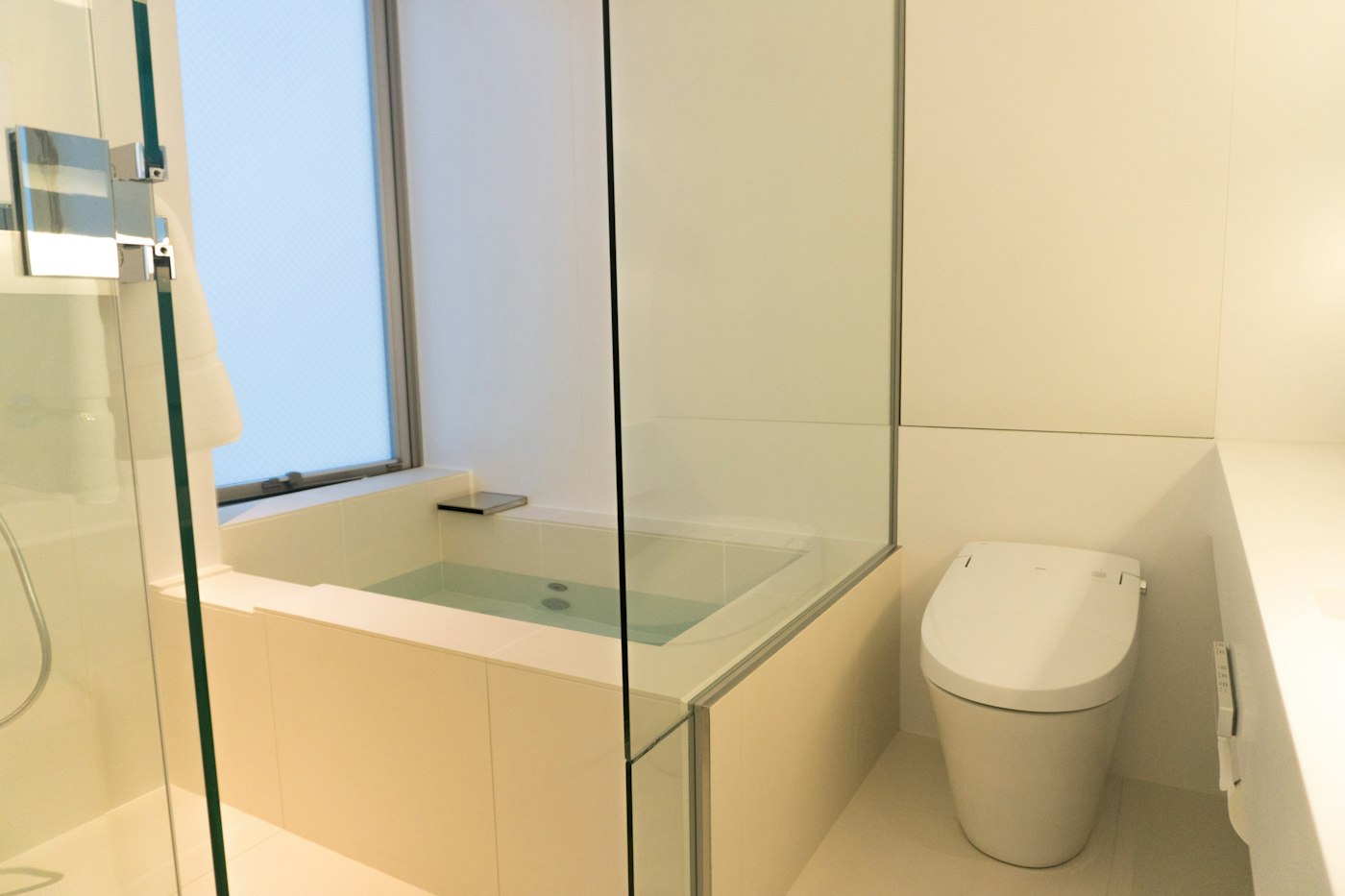
- Use glass thoughtfully. A clear glass shower enclosure is beautiful, but in a shared bath, frosted or textured glass gives users more comfort.
- Look at the mirror. Large mirrors can reflect parts of the room toward the doorway. Check angles before the mirror is hung.
- Separate when possible. In bathrooms shared by several family members, a separate compartment for the toilet, or a door between the vanity area and the shower and toilet, lets more than one person use the room at once.
Mistakes to Avoid
- Relying on a barn door for a guest bath. As the open gaps around the panel show, these doors look good but do little for privacy or sound.
- Choosing a loud fan to save money. A fan that roars becomes the one nobody wants to switch on, which leads to humidity and mildew problems as well.
- Forgetting the walls shared with bedrooms. Plumbing noise from a guest bath can wake someone sleeping on the other side of the wall. Insulating that wall during a remodel is far easier than doing it later.
- Using sheer curtains as the only window covering. They look soft but do little at night when the room is lit.
Questions Homeowners Ask
Can I improve privacy without a full remodel?
Yes. Replacing a hollow-core door with a solid-core one, adding window film, upgrading the lockset and installing a quieter fan are all modest projects with noticeable results.
What lock works best with children around?
A privacy lockset with an emergency release on the outside is the standard choice. Keep the release tool somewhere adults can find quickly, such as on the trim above the door.
Are pocket doors noisier than hinged doors?
Generally, a pocket door blocks less sound because it does not seal against stops on all sides. Choosing a solid slab and good hardware helps.


