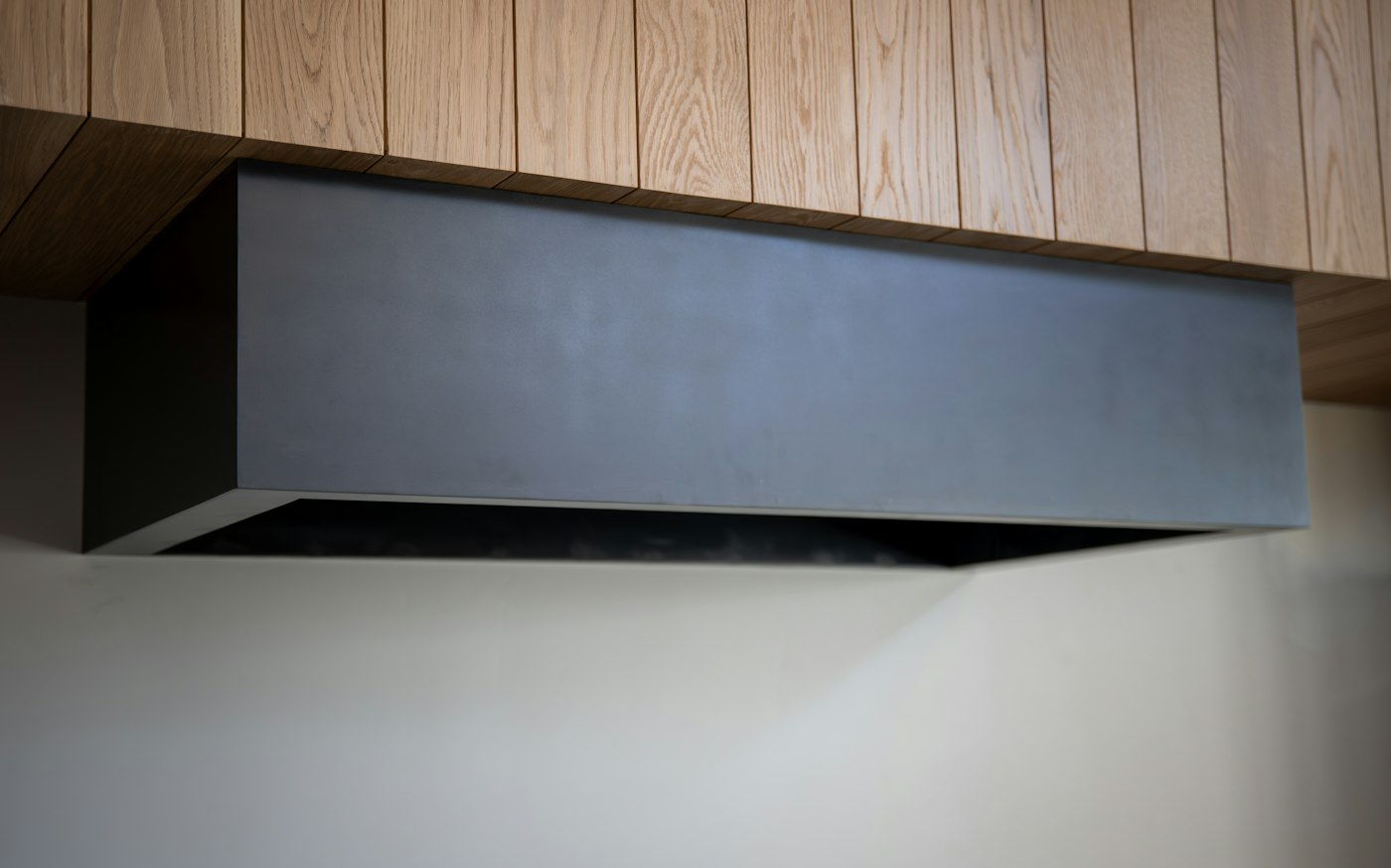
Cooking releases heat, steam, grease and odors into the air, and in winter, when windows stay closed, those byproducts linger. A range hood captures and removes them, helping keep the kitchen comfortable and cabinets and walls cleaner. Hoods also play a big role in the look of a kitchen. Understanding how they work helps you choose one that performs as well as it looks.
Ducted Hoods
A ducted hood pulls air from the cooking area and sends it through ductwork to the outside of the house. Because it removes air entirely, a ducted hood is generally considered the more effective option for removing heat, moisture, grease and odors. Ducted hoods require a path for ductwork, usually through an exterior wall or the roof, which can be easier or harder depending on where the range sits.
Ductless or Recirculating Hoods
A ductless hood pulls air through filters and then returns it to the kitchen. Grease filters catch grease, and charcoal or carbon filters help reduce odors. Ductless hoods are useful when venting to the outside is impractical, such as in some apartments, condos or interior kitchen locations. They do not remove heat or moisture from the room, and their filters need regular replacement to remain effective.
Common Hood Styles
- Under-cabinet hoods mount beneath an upper cabinet above the range.
- Wall-mount chimney hoods attach to the wall without cabinets above, often making a design statement.
- Island hoods hang from the ceiling over a cooktop in an island.
- Custom hood inserts sit inside a decorative enclosure built to match the cabinets or walls.
- Downdraft systems rise from the counter or are built into the cooktop, pulling air down. They can suit islands where an overhead hood is not wanted, though they generally capture rising smoke less effectively than overhead hoods.
Planning for Performance
Several factors affect how well a hood works. A hood that is at least as wide as the cooking surface captures more of the rising air, and some designers recommend going a bit wider. Mounting height matters, too: too high and the hood captures less, too low and it gets in the way. Manufacturers specify recommended mounting heights for their products. Duct size, length and the number of bends affect airflow, so shorter, straighter duct runs are better.
Hoods are rated by airflow, typically in cubic feet per minute. More powerful hoods are not always better, since higher airflow may be louder and, in some jurisdictions, can trigger requirements for makeup air, which brings fresh outside air in to replace what the hood removes. Check with your local building department or contractor about requirements where you live.
Everyday Use and Care
- Turn the hood on a few minutes before you start cooking and leave it running briefly after.
- Use the back burners when possible, since hoods capture them more effectively.
- Clean or replace filters regularly according to the manufacturer.
- Choose a hood with lighting to illuminate the cooktop.
If you are planning a kitchen remodel and want ventilation designed in from the start, reach out through our contact page.
Planning Your Hood, Step by Step
Ventilation works best when it is considered early, alongside the cooktop and the cabinet layout.
- Choose the cooking surface. The type, width and power of your range or cooktop guide the size and capacity of the hood.
- Decide where the air will go. Determine whether a duct can reach the outside through a wall, the roof or a soffit. Note any obstacles, such as joists, upper floors or windows.
- Pick the hood style. Select an under-cabinet, wall-mount, island, insert or downdraft design that fits the layout and the look you want.
- Size the hood. Match or exceed the width of the cooking surface, and confirm the depth covers the front burners.
- Plan the duct run. Keep it as short and straight as possible, use the duct size the manufacturer specifies and minimize elbows.
- Ask about makeup air. Find out whether local code requires makeup air for the hood you are considering.
- Coordinate with cabinets and lighting. Plan cabinet heights, hood mounting height and any lighting around the hood together.
Matching Ventilation to How You Cook
Light, everyday cooking
If you mostly simmer, steam and bake, a well-sized under-cabinet or wall-mount hood with moderate airflow may be all you need.
Frequent searing and frying
High-heat cooking produces more smoke and grease. A deeper hood with greater capture area and solid ducting will be more effective.
Island cooktops
Without walls to help contain rising air, island hoods often need to be larger to capture the same amount of smoke and steam as a wall hood.
Open-plan kitchens
Cooking odors travel more easily into living areas, so a quiet, effective hood is especially valuable. Consider a model that runs quietly on lower settings for everyday use.
Common Ventilation Mistakes
- Choosing a hood smaller than the cooktop. Smoke and steam escape around the edges.
- Venting into the attic or a cabinet. Ducts should always terminate outside, not in an attic, wall cavity or soffit space.
- Using flexible duct. Smooth metal ducts allow better airflow and are easier to keep clean than flexible ducting.
- Mounting too high for looks. Raising a hood to open up sight lines reduces its ability to capture rising air. Follow the manufacturer’s recommendation.
- Ignoring noise. A loud hood often goes unused. Check sound levels and consider remote or inline blowers if quiet is a priority.
Range Hood Questions We Hear
Do I need a hood with an induction cooktop? Induction does not burn gas, but cooking still releases steam, grease and odors. Ventilation remains helpful with any type of cooktop.
How often should I clean the filters? It depends on how often you cook. Many metal grease filters can be cleaned in warm soapy water or a dishwasher, and charcoal filters in ductless hoods need periodic replacement. Follow the manufacturer’s schedule.
Can a microwave over the range replace a hood? Over-the-range microwaves include a fan, but they often capture less than a dedicated hood. For frequent cooking, a hood is usually more effective.
Why does my hood seem weak? Clogged filters, a long or crushed duct, a stuck exterior damper or an undersized fan can all reduce performance. Cleaning the filters and checking the damper are good first steps.
What is a backdraft damper? It is a flap that opens when the hood runs and closes when it stops, helping keep outside air from flowing back into the kitchen.