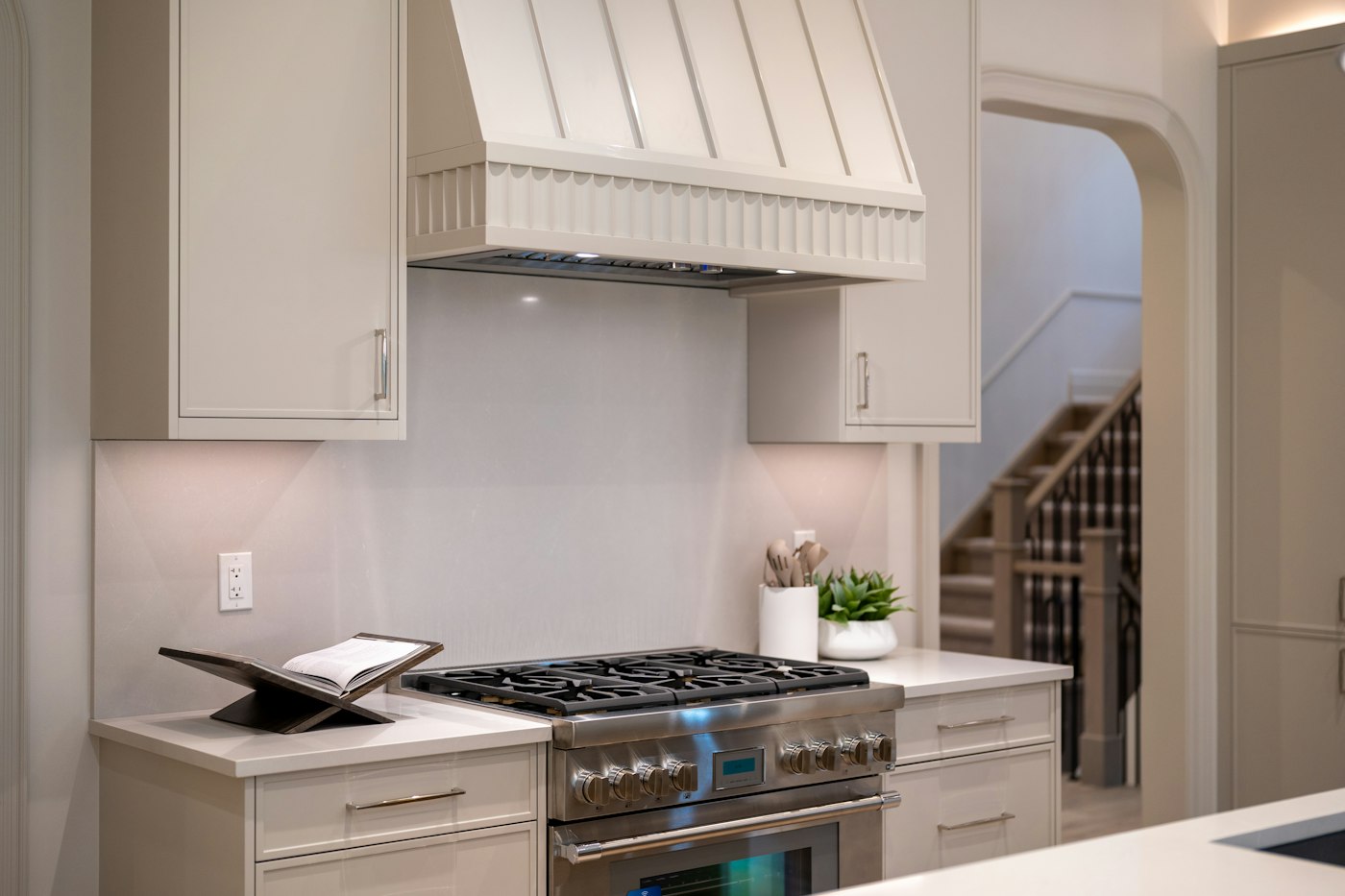
The range hood is one of the hardest-working appliances in the kitchen and one of the most neglected. It pulls grease, smoke, steam and cooking odors away from your cooktop, but only if its filters are clear and its fan has the strength to move air. The maintenance rule is short: clean filters monthly; replace weak fans. With the holiday cooking season ahead, now is a good time to give the hood some attention. Here is how to clean it, how to tell when the fan is no longer doing its job and what to consider if it is time for a repair or replacement.
Why the Range Hood Matters
Cooking releases grease particles, moisture, smoke and combustion byproducts from gas burners. A properly working hood:
- Keeps grease from settling on cabinets, walls and ceilings.
- Reduces lingering cooking odors.
- Removes steam that can contribute to moisture problems.
- Helps clear smoke before it sets off the smoke alarm.
- Improves indoor air during cooking, especially with gas ranges.
When filters clog, the fan has to work harder to move less air. Grease builds up inside the hood and ductwork, which reduces performance and can become a fire concern if left long enough.
Cleaning Filters Monthly
Most range hoods use metal mesh or baffle filters that trap grease. For a household that cooks regularly, cleaning them about once a month keeps airflow strong. Heavy fry cooks may need to clean more often.
How to clean metal filters
- Turn off the hood and let it cool if you have been cooking.
- Remove the filters. Most pop out with a latch or slide out of a track.
- Fill a sink or tub with very hot water and a grease-cutting dish soap. A little baking soda can help.
- Soak the filters for 10 to 15 minutes to loosen grease.
- Scrub gently with a soft brush, working with the grain of the mesh or baffles.
- Rinse thoroughly and let them dry completely before reinstalling.
Many metal filters are dishwasher-safe; check the manufacturer’s instructions first, since some finishes can discolor.
Charcoal filters
Recirculating hoods, which do not vent outdoors, use charcoal or carbon filters to absorb odors. These cannot be washed. Replace them on the schedule the manufacturer recommends, which is often every few months with regular use.
Don’t skip the hood itself
Wipe down the inside of the hood, the underside and the fan housing you can reach with a degreasing cleaner. Clean the light covers and replace burned-out bulbs, preferably with LEDs if your hood allows.
Signs the Fan Is Weak or Failing
If the filters are clean and the hood still is not clearing the air, the fan or the ductwork may be the problem. Watch for:
- Smoke and steam rolling past the hood instead of being drawn up.
- Cooking odors that linger for hours.
- Grease film building up on nearby cabinets.
- New or louder noises, such as rattling, grinding or humming.
- A fan that runs slowly, intermittently or only on certain speeds.
- A fan that will not turn on at all.
A simple test is to hold a single square of paper towel near the filter with the fan on high. A working hood should pull it firmly against the filter.
Repair or Replace?
Possible repairs
- Fan motor: A failing motor can sometimes be replaced if parts are available for your model.
- Switches and controls: Worn switches or control boards can cause speed or on-off problems.
- Ductwork issues: Crushed, disconnected or grease-clogged ducts reduce airflow even with a good fan.
- Exterior damper: A stuck or blocked damper at the exterior wall or roof cap can choke airflow.
When replacement makes sense
- The hood is older and parts are hard to find.
- The fan was undersized to begin with for your cooktop.
- You are upgrading the range or cooking more often.
- You want quieter operation, better lighting or a different style.
Choosing a Replacement Hood
- Vented versus recirculating: A hood ducted to the outdoors removes grease, moisture and combustion byproducts; recirculating hoods filter and return air to the kitchen. Venting outside is generally more effective where it is possible.
- Size: A hood that is at least as wide as the cooktop captures better.
- Airflow: Hoods are rated by airflow capacity. Match it to your cooktop and how you cook, following the range and hood manufacturer guidance. Very high-capacity hoods may trigger local requirements for makeup air.
- Noise: Look at sound ratings; a quieter hood is one you will actually use.
- Duct size and route: Short, straight duct runs of the proper diameter perform best.
- Mounting height: Follow the manufacturer’s recommended range for distance above the cooktop.
Replacement often involves electrical connections and sometimes new ductwork through walls or the roof. Changes to wiring should be done by a qualified professional, and exterior penetrations must be sealed and flashed against weather.
Common Mistakes to Avoid
- Letting filters go for months between cleanings.
- Trying to wash charcoal filters.
- Running the fan only after smoke appears instead of turning it on when you start cooking.
- Venting a hood into an attic or wall cavity instead of outdoors.
- Choosing a hood narrower than the cooktop.
For this week, pull the filters and clean or replace them, wipe down the hood interior and light covers, do the paper towel test to check suction, look at the exterior vent cap for blockages, and set a monthly reminder to clean filters going forward. If the fan still struggles, it is time for a repair or a new hood. We repair and replace range hoods, including the venting that makes them work. AX Home Pro handles repairs, improvements and maintenance for homeowners. Request an estimate to get started.