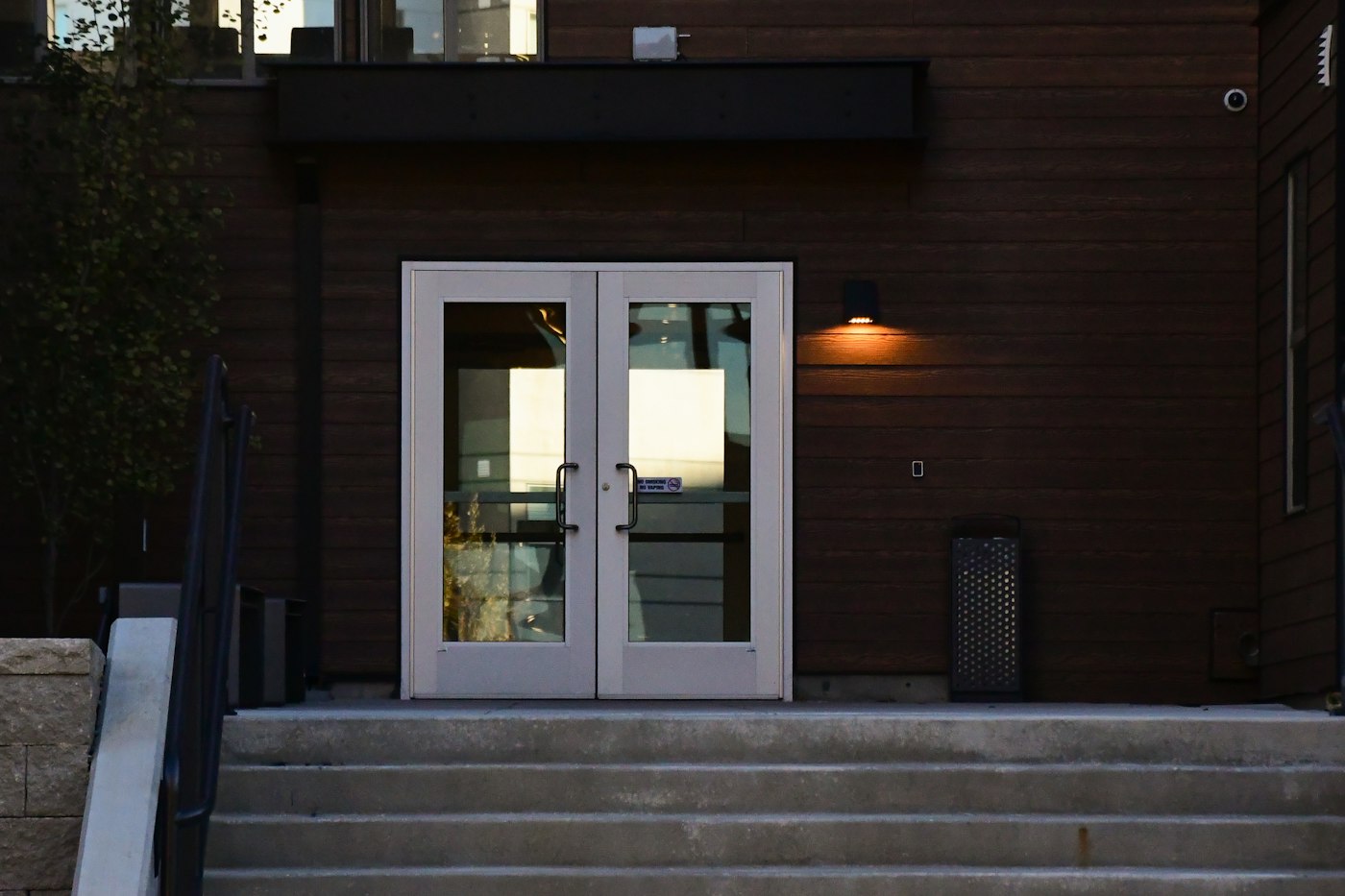
The threshold is the strip at the bottom of an exterior doorway that you step over every day without thinking about it. It also happens to take more abuse than almost any other part of the house: foot traffic, rain, snowmelt, sun and constant contact with the door sweep. Wooden thresholds and the sills beneath them eventually soften and rot, letting in drafts, water and sometimes insects. When it is time to fix one, we recommend you replace with composite or aluminum for longevity. Here is how to tell if your threshold is failing, why those materials last longer and what a proper replacement involves.
Signs Your Threshold Is Rotting
- Soft or spongy wood when you press it with a screwdriver tip or thumb.
- Dark staining, cracking or splitting, especially at the ends where the threshold meets the door jambs.
- Peeling paint or failing finish that keeps coming back.
- Gaps under the door that let in light or drafts.
- Water on the floor inside the door after rain.
- Rot at the bottom of the door jambs or the trim beside the door.
- Insect activity or small holes in the wood.
- A threshold that moves or rocks when you step on it.
Rot at a threshold is often a sign that water has been getting in for a while. The visible damage may be only the start; the subfloor and framing underneath can be affected too.
Why Composite or Aluminum Lasts Longer
Composite
Composite thresholds and sills are made from materials that do not absorb water the way wood does. They resist rot, swelling and insect damage, and many can be painted or come in finishes that look like wood. Composite is a good fit where you want the look of a traditional sill with far less maintenance.
Aluminum
Aluminum thresholds are durable, weather-resistant and common on exterior doors. Many include an adjustable center cap that can be raised or lowered to seal against the door bottom. Some combine an aluminum top with a composite or thermally broken base for better performance in cold weather.
Choosing between them
Both materials are good choices; the right one depends on the door. Aluminum with an adjustable cap is a practical fit for standard entry doors where a tight seal is the priority. Composite is often preferred where the original look of a wood sill matters, such as on older homes or doors with a traditional design. Your door manufacturer may also specify a compatible threshold profile so the door bottom and sweep seal correctly, which is worth checking before ordering.
Why not just another wood threshold?
Wood can work, especially under a deep covered porch, but in exposed locations it tends to rot again unless it is a highly rot-resistant species and is meticulously sealed and maintained. Composite and aluminum simply hold up better in the place where water collects.
What a Proper Replacement Involves
- Removing the old threshold. Old thresholds are often fastened under the door jambs and casing. Careful removal avoids damaging the jambs, flooring and weatherstripping.
- Inspecting what is underneath. Once the old threshold is out, check the subfloor, sill plate and jamb bottoms for rot. This is where many hidden problems show up.
- Repairing damaged framing. Rotted subfloor or jamb sections must be cut out and replaced before the new threshold goes in. Jamb repair kits or new jamb ends can be used where appropriate.
- Flashing and sill pan. A sill pan or flashing beneath the threshold directs any water that gets past it back outside instead of into the floor framing. This step is critical and often skipped.
- Setting the new threshold. Cut it to fit, bed it in a quality sealant and fasten it as the manufacturer directs, making sure it is level and slopes slightly to shed water outside.
- Sealing the edges. Seal where the threshold meets the jambs and the exterior surface.
- Adjusting the door. Adjust the threshold cap, door sweep and weatherstripping so the door closes easily and seals tightly.
Preventing Future Threshold Damage
- Make sure gutters over the door are clean and do not overflow onto the step.
- Check that the landing or step outside slopes away from the door.
- Consider a small overhang or awning on very exposed entries.
- Keep the door sweep and weatherstripping in good condition.
- Re-seal the threshold edges when caulk cracks or pulls away.
- Use a doormat outside that does not hold water against the threshold.
- Consider a storm door to shield an exposed entry.
Common Mistakes to Avoid
- Installing a new threshold over rotted subfloor or jamb ends.
- Skipping the sill pan or flashing.
- Setting the threshold flat or sloped inward, so water runs into the house.
- Over-tightening the threshold cap, making the door hard to close.
- Patching rot with filler when the wood is deeply damaged.
When a Bigger Fix Makes Sense
If the door slab, jambs and sill are all deteriorated, replacing the threshold alone may not be enough. A prehung exterior door, which comes with new jambs and a new sill, may be the better long-term choice. We can help you weigh a threshold repair against a door replacement based on what we find.
To get started this week:
- Check each exterior door threshold for soft spots, cracks and gaps.
- Look for water stains or soft flooring just inside the door.
- Test the jamb bottoms on both sides for rot.
- Check gutters and the slope of the step outside.
- Plan a composite or aluminum replacement with proper flashing before winter weather.
We replace rotted thresholds and repair the framing beneath them so the fix lasts. AX Home Pro handles repairs, improvements and maintenance for homeowners. Request an estimate to get started.