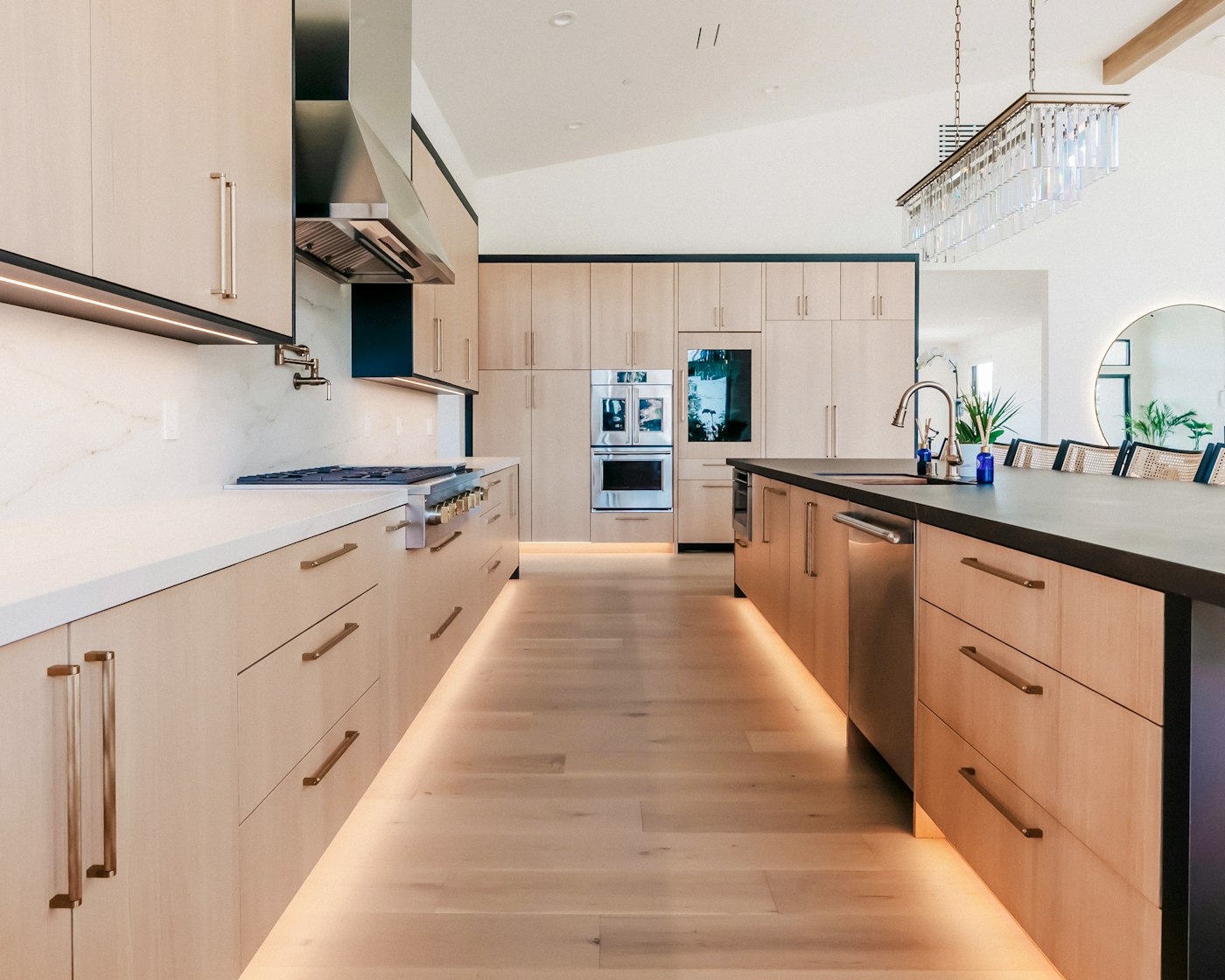
Cabinet doors cover a large share of the visible surface in most kitchens, so their style has a big influence on the room’s personality. The good news is that most doors fall into a handful of recognizable styles. Understanding them makes it easier to describe what you like and to imagine how it will look in your home.
Shaker Doors
The Shaker door is a five-piece door with a flat, recessed center panel framed by four pieces, called rails and stiles. The style takes its name from the Shakers, a religious community known for simple, well-crafted furniture. Its clean lines make it remarkably versatile. Painted white or soft gray, a Shaker door looks classic and fresh. In a deep color or natural wood, it can look traditional or modern depending on the hardware and countertops around it.
Slab Doors
A slab door is a single flat panel with no frame or profile. Slab doors are a signature of modern, minimalist and mid-century kitchens. They highlight material and color, so they look striking in wood veneers, high-gloss lacquer or matte finishes. Slab doors pair naturally with frameless cabinets and handle-free or slim-profile hardware. Because there is no frame to break up the surface, careful alignment of doors and drawers really shows.
Raised Panel Doors
A raised panel door has a center panel that is shaped to rise toward the front, often with a decorative profile around the edges. It creates depth and shadow and reads as more formal and traditional. Raised panel doors often appear in kitchens with crown molding, ornate hardware and classic architectural details. They can also collect a bit more dust in their profiles than flatter styles.
Other Styles Worth Knowing
- Beadboard: A center panel with vertical grooves, often used in cottage and farmhouse kitchens.
- Glass front: A frame with glass in place of a solid panel, good for displaying dishes. Clear, seeded or frosted glass changes the effect.
- Slim Shaker: A Shaker door with narrower rails and stiles for a more contemporary feel.
- Fluted or reeded: Vertical ridges or grooves that add texture, often used as an accent on an island.
Choosing a Style That Lasts
Consider the architecture of your home. A door style that echoes the home’s existing trim and character usually feels more natural than one that fights it. Think about maintenance too; very detailed profiles take more effort to clean, and high-gloss finishes can show fingerprints. Finally, remember that hardware, color and countertops dramatically change how any door reads. A Shaker door with sleek bar pulls and a quartz top feels very different from the same door with cup pulls and butcher block.
Mixing styles can also work well, such as slab doors on an island with Shaker doors on the perimeter. Order a sample door when possible and look at it with your other finishes. If you are planning new cabinets, reach out through our contact page and we can talk through styles that fit your home.
Matching Door Styles to Your Home’s Architecture
A door style that suits the bones of your house tends to age gracefully. Here are some natural pairings to consider, keeping in mind that personal taste always has a vote.
- Colonial and traditional homes: Raised panel or classic Shaker doors, often with inset or traditional overlay, echo the paneled doors and trim found in these houses.
- Craftsman and bungalow homes: Shaker doors in wood tones or earthy painted colors suit the simple, sturdy detailing typical of the style.
- Farmhouse and cottage homes: Shaker, beadboard and glass-front doors fit the relaxed, practical character, especially with open shelving.
- Mid-century homes: Slab doors in warm wood veneers or bold colors, with slim pulls, honor the era’s clean lines.
- Contemporary homes: Slab or slim Shaker doors with minimal hardware let materials and proportions do the talking.
How to Choose Your Door Style, Step by Step
- Look at your interior doors and trim. Are they paneled, flat or simply detailed? Your cabinets will sit alongside them every day.
- Collect photos and look for patterns. Gather kitchens you love and notice which door style keeps appearing. You may be more consistent than you think.
- Narrow to two styles. Choose the two strongest candidates and request sample doors if the manufacturer offers them.
- Test with finishes. Hold samples next to your countertop, floor and backsplash choices, in daylight and in the evening.
- Try hardware on the sample. Lay a knob and a pull on each door. Hardware can shift a style from traditional to modern quickly.
- Consider the drawer fronts. Decide whether drawers will match the doors or use a simpler slab front, which is common with Shaker kitchens.
Door Style Mistakes to Avoid
Following a trend without considering the house
A highly stylized door can look dated sooner if it clashes with the home’s character. If you love a trend, consider using it on an island or a small accent area.
Underestimating cleaning
Detailed profiles and grooves collect dust and kitchen grease. In busy cooking zones, simpler doors are easier to keep clean.
Mixing too many styles
One accent style alongside a main style feels intentional. Three or more often looks unplanned.
Forgetting about painted door seams
Five-piece painted doors, such as Shaker, can show fine lines where the rails and stiles meet as wood moves with the seasons. This is normal for the construction, but it helps to know before choosing.
Cabinet Door Questions We Hear
Is Shaker going out of style? Shaker has remained popular for a long time because it is simple and adaptable. Its look changes with color, hardware and proportions, which helps it stay current.
Do slab doors work in a traditional home? They can, especially in a warm wood tone or paired with traditional hardware, though many homeowners prefer them on an island or in a more modern space.
Can I replace just the doors on existing cabinets? If the cabinet boxes are in good condition and the layout works, new doors and drawer fronts can refresh a kitchen. Sizes must be matched carefully, and hinges may need updating.
What about glass doors in a busy kitchen? Glass fronts display what is inside, so they work best for items you keep tidy, such as matching dishes or glassware. Frosted or seeded glass is more forgiving.
Whatever you choose, live with the sample for a while before you commit. A door you still like after a couple of weeks on your counter is a door you are likely to enjoy for years.