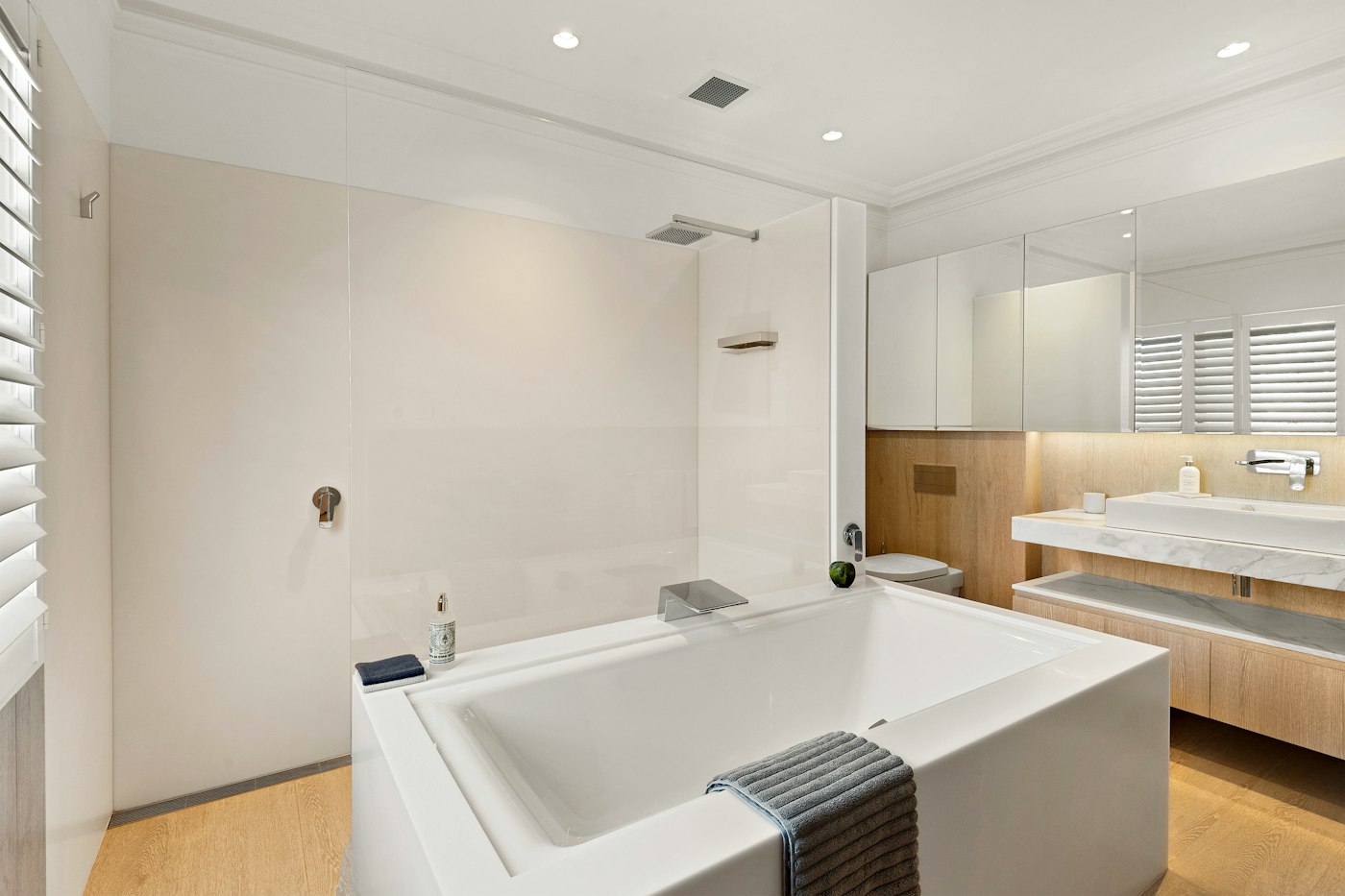
Tile and glass get the attention in a new shower, but the features that make a shower pleasant to use every day are smaller and easier to overlook. Where will the shampoo go? Is there a place to sit or prop a foot? Is there something sturdy to hold if the floor is slick? These details have to be planned before the walls are closed up, so they belong early in the conversation, not at the end.
Niches: Storage Built Into the Wall
A recessed niche replaces the corner caddy and the bottles lined up on the floor. It is framed between studs, waterproofed with the rest of the shower and tiled to match or contrast. A few planning points make a niche work well. It should sit at a comfortable height for the people using it, out of the direct spray so bottles do not fill with water, and ideally on a wall that is not shared with an exterior wall, where insulation and framing can complicate things. Tall bottles need a tall niche. A sloped bottom shelf sheds water, and a solid-surface or stone sill avoids grout joints where soap scum collects.
Some showers use a long horizontal niche that runs most of the wall; others stack two small niches, one at adult height and one lower for children. Niches can also be placed in the half wall of a tub deck or at the end of the shower, where they are less visible from the room.
Benches and Seats
A bench is useful for far more than sitting. It is a place to shave, to rest a foot, to set a basin for washing a child or a pet, and to give an older family member stability. A built-in bench is framed and waterproofed with the shower and topped with tile, stone or solid surface. It should be sloped slightly so water drains off. Corner seats take less room than full-width benches and suit smaller showers. A fold-down seat mounted to blocking in the wall is another option where floor space is tight, and a freestanding teak stool is a flexible alternative for showers that are already built.
Grab Bars for Everyone
Grab bars have shed their institutional image. Today they come in the same finishes as faucets and towel bars and are often designed to double as shelves or towel holders. They matter for anyone, not only people with mobility concerns; a wet tile floor is slippery for all ages. The key is that grab bars need solid blocking inside the wall to be anchored safely, and that blocking has to be installed before the wall is tiled. Even if you do not want bars now, adding blocking during a remodel is an easy way to make them possible later.
- Place a vertical bar near the shower entry, where people step over the curb.
- Place a horizontal bar on the wall beside a bench.
- Choose a diameter that is comfortable to grip.
Plan Them Together
Niches, benches and bars interact. A bench changes where a niche should be; a bar should not block a niche; a handheld shower on a slide bar is easier to use from a seated position. Sketch the shower as you would use it, step by step, and share that with your contractor. The best time to get these details right is before the first sheet of backer board goes up.
Planning These Features Step by Step
Because niches, benches and grab bars all depend on what happens inside the walls, they need to be decided early. Here is the order we follow.
- List who will use the shower and how. Consider heights, mobility, whether children or pets will be bathed there and whether anyone prefers to sit.
- Choose the shower layout and valve location. Knowing where the controls, showerhead and any handheld sprayer will go determines where niches and benches make sense.
- Locate the niche on an interior wall, out of the direct spray, at a height that works for the primary users.
- Decide on seating: built-in bench, corner seat, fold-down seat or freestanding stool.
- Mark grab bar positions and plan blocking for them, plus additional blocking where future bars might go.
- Coordinate with tile layout so grout lines align neatly with the niche edges and the bench top.
- Photograph the framing before the walls are closed, so you have a record of where blocking is located.
Sizing Considerations
Niches
Measure the tallest bottles you use and add some clearance. Width is often set by stud spacing, though wider niches are possible with additional framing. Depth is limited by the wall cavity, which is why exterior and plumbing walls are less ideal.
Benches
A comfortable seat height and enough depth to sit securely are important. A bench that is too shallow is hard to use, while one that is too deep can take up valuable floor space. Consider the overall shower size so the bench does not crowd the space.
Grab Bars
Bars come in a range of lengths. The right length depends on where the bar is placed and what it is meant to support. Blocking should extend beyond the bar’s mounting points to allow some flexibility in placement.
Mistakes We Help Homeowners Avoid
- Putting the niche in the spray zone, which leaves bottles full of water and the niche constantly wet.
- Placing the niche where it is visible from the bathroom door, when a less visible wall would do.
- Building a bench without enough slope, which allows water to pool on the seat.
- Relying on towel bars as grab bars. Towel bars are not designed to support a person’s weight.
- Skipping blocking because no one needs grab bars today.
- Mounting grab bars with drywall anchors rather than into solid blocking or framing.
Shower Detail Questions We Hear
Can I add a niche to an existing shower?
It is sometimes possible, but cutting into a finished, waterproofed wall is complicated and must be done carefully to preserve the waterproofing. It is far simpler to include a niche during a remodel.
Do grab bars come in decorative styles?
Yes. Many manufacturers offer grab bars in the same finishes as faucets and accessories, and some are designed to look like towel bars or shelves while still meeting strength requirements.
Is a teak stool as good as a built-in bench?
A teak stool is flexible and easy to add to an existing shower, but it does not offer the same stability as a built-in seat. It can be a good solution where a built-in is not practical.
How do I clean a niche easily?
A sloped bottom, a solid sill and minimal grout joints all help. Wiping it during regular shower cleaning keeps soap scum from building up.