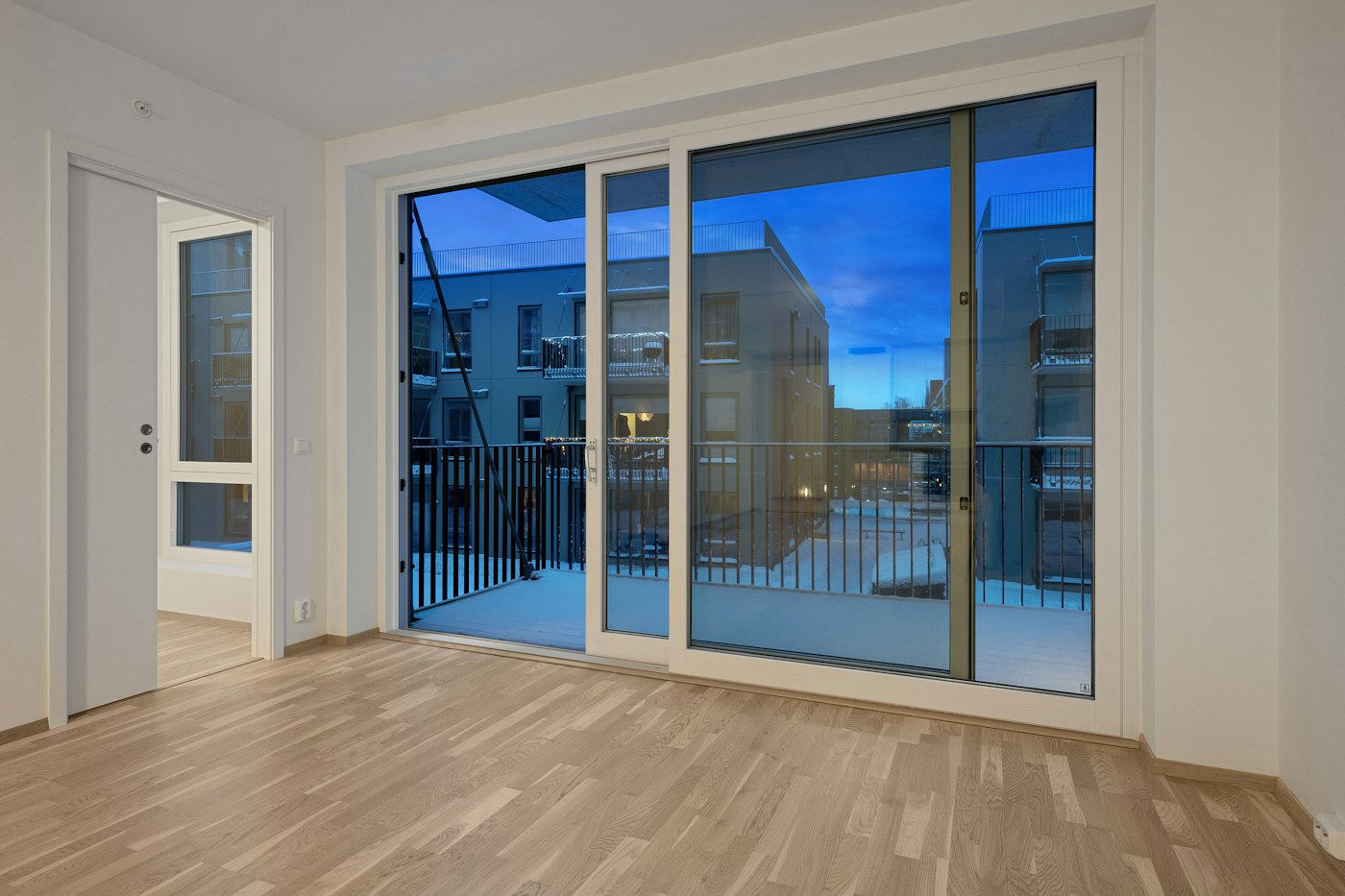
As the weather turns, the door to the backyard becomes the most used door in the house. If it sticks, leaks, or offers a view through a small pane of glass, spring is the time to think about replacing it. Patio doors have become a design element in their own right, with options that range from a standard slider to walls of glass that fold away entirely.
Sliding Doors
The classic sliding patio door has two panels, one fixed and one that glides past it. It requires no swing space, which makes it ideal where furniture sits close to the door or a deck is narrow. Modern sliders are far better than the aluminum doors of past decades, with insulated glass, multi-point locks, smoother rollers and frames in vinyl, fiberglass, wood or aluminum-clad wood. The limitation is the opening: only half of the door’s width ever opens, and the fixed panel can block a view or a breeze. Three- and four-panel sliders widen the possibilities.
French Doors
Hinged French doors open fully, offering an unobstructed opening the full width of both panels and a traditional look that suits many architectural styles. In-swing doors need clear floor space inside; out-swing doors need space on the deck or patio and protection from weather on the hinged side. French doors seal tightly when well made, since the panels compress against weatherstripping rather than sliding past it. They need a strong lock system at both the handle and the top and bottom of the inactive door, and screens are less elegant than on a slider, often taking the form of a retractable or sliding screen.
Multi-Slide and Lift-and-Slide Doors
These systems stack several large panels that slide to one side or into a wall pocket, creating very wide openings. Lift-and-slide hardware raises the panels slightly off their seals to glide and lowers them to seal tightly when closed. They bring in a great deal of light and connect a room to the outdoors dramatically. They are heavy, require careful structural planning for the header and sill, and cost more than standard doors. A flush or low sill makes the indoor-outdoor connection stronger but needs good drainage design.
Folding Doors
Bi-fold or folding glass doors are panels hinged together that fold accordion-style and stack at one or both ends of the opening. When open, the entire wall disappears. They are popular for kitchens that open to a patio or outdoor kitchen. Considerations include the stacked panels, which take up space at the side of the opening, the complexity of the hardware, and the fact that a folding door’s primary purpose is to be open; for everyday in-and-out use, many designs include a single swinging access panel.
What Every Patio Door Needs
- Insulated, low-emissivity glass to control heat gain and loss.
- Solid weatherstripping and a sill designed to shed water.
- A screen option that fits how you plan to use the door.
- Secure locking hardware, with a secondary lock on sliders.
- A frame material suited to your climate and the look of the house.
Measure the opening, think about how traffic will move and consider whether you want the door to be a passage or a feature. If you are enlarging an opening, the work involves the exterior wall and a new header, so it belongs with a licensed contractor and usually a permit. A well-chosen patio door makes the yard feel like another room of the house, which in spring is exactly what most of us want.
Choosing a Patio Door Step by Step
A patio door touches structure, weatherproofing, furniture layout and the way you move between inside and out. We find it helps to work through the decision in this order.
- Measure the existing opening and note what sits on either side of it inside, such as cabinets, a dining table or a sofa.
- Check the outside. Note the depth of the deck or patio landing, any steps, the direction the door faces and how exposed it is to rain and wind.
- Decide whether to keep or change the opening size. Keeping the existing size is simpler. Widening it involves the wall structure and typically a permit.
- Choose the operating style that fits how often you open the door, how much of it you want open and how much space is available for swinging panels.
- Select the frame material and finish based on climate, maintenance preferences and the look of the house.
- Pick glass options, such as low-emissivity coatings, tempered safety glass and any built-in blinds or decorative grilles.
- Plan the screen, locks and threshold before ordering, since these are harder to change later.
How Each Style Works With Everyday Life
For Busy Households
A smooth-gliding slider is often the easiest door to operate with full hands, a pet at your heels or children running in and out. It does not block furniture and works well with a sliding screen.
For Formal or Traditional Rooms
French doors bring symmetry and classic proportions that suit dining rooms and living rooms in many traditional homes. They can also be paired with matching sidelights or transoms for additional light.
For Entertaining
Multi-slide and folding doors excel when the goal is to open a room fully for gatherings. They are best where the opening and budget allow and the household will open them often enough to enjoy the feature.
Common Patio Door Mistakes
- Ignoring the swing. An in-swing French door may collide with furniture, while an out-swing door may hit a grill or deck chairs.
- Forgetting about screens. A beautiful door without a practical screen may stay closed on pleasant evenings.
- Overlooking sun and heat. Large glass doors facing strong sun can make a room warm. Glass coatings, overhangs and window treatments help.
- Neglecting the threshold and flashing. Water intrusion at the sill is a common problem when doors are not properly flashed and sealed.
- Choosing a low sill without drainage planning. Flush thresholds need careful design to keep water out.
Patio Door Questions We Hear
Can a sliding door be replaced with a French door?
Often, yes, if the opening is a suitable size. The swing space inside or outside must be available, and the frame and threshold will be replaced along with the door.
Which frame material is easiest to maintain?
Vinyl and fiberglass generally require less upkeep than wood. Aluminum-clad wood offers a wood interior with a low-maintenance exterior.
Are built-in blinds a good idea?
Blinds sealed between glass panes stay clean and are protected from pets and children. They do limit your options to change window treatments later.
How do I make a slider more secure?
Multi-point locks, a secondary foot lock or bar in the track and quality rollers that keep the panel seated all improve security.