Working from home is a lot easier when the dishwasher, the television and the dog barking at the mail carrier are not part of every video call. The good news is that you usually do not need to tear open walls to make a home office dramatically quieter. A handful of targeted upgrades handles most of the problem: solid-core door, seals, rugs and acoustic panels. This guide explains how sound gets into and around a room, what each of those upgrades does, and how to decide which ones your office needs most.
Two Different Problems: Blocking and Absorbing
“Soundproofing” is often used to describe two different goals, and it helps to separate them:
- Blocking sound keeps noise from passing between rooms. This depends on mass and airtightness. Heavy, dense materials and sealed gaps stop sound from traveling through.
- Absorbing sound reduces echo and reverberation within the room. Soft, porous materials soak up sound reflections so your voice sounds clearer on calls and the room feels calmer.
Most home offices benefit from both. A solid-core door and seals block noise coming in and keep your conversations private. Rugs and acoustic panels tame echo so microphones pick up your voice instead of the room.
Start With a Solid-Core Door
In most rooms, the door is the weakest point for sound. Many interior doors are hollow-core: two thin skins over a mostly empty interior. They are lightweight and inexpensive but let sound pass through easily.
A solid-core door has a dense composite or wood core, making it much heavier. That mass blocks far more sound. Swapping a hollow-core office door for a solid-core one is often the single most effective upgrade for privacy.
What the swap involves
- Choosing a solid-core slab that matches the existing door size and style, or a prehung unit if the frame needs replacement.
- Transferring or mortising for hinges and the lockset.
- Checking that hinges and the frame can support the added weight; heavier doors may need longer screws into the framing or a third hinge.
- Adjusting for an even gap and smooth swing.
Seal the Gaps
Sound travels wherever air can. Even a solid door leaks noise through the gap around its edges and especially underneath. Sealing those gaps is inexpensive and effective.
- Weatherstripping or acoustic seals around the door stop so the door closes against a continuous gasket.
- A door sweep or automatic door bottom to close the gap at the floor. Automatic door bottoms drop a seal when the door closes and lift when it opens, so they do not drag on flooring.
- Acoustic caulk along gaps where trim meets walls and around the door frame.
- Outlet and switch gaskets on shared walls.
- Sealing penetrations where pipes, cables or ducts pass through.
Keep ventilation in mind. Heating and cooling systems need a return air path. If you tightly seal a door in a room without its own return, it can affect airflow and comfort. A qualified HVAC professional can advise on options like a transfer grille designed to limit sound.
Add Rugs and Soft Furnishings
Hard floors reflect sound, making a room echo and amplifying footsteps for anyone below. A large area rug with a thick pad:
- Absorbs sound reflections within the room.
- Reduces footstep noise transmitted to the floor below.
- Softens chair-rolling noise if you use a chair mat designed for rugs.
Other soft surfaces help too. Upholstered furniture, heavy curtains, a filled bookcase and even fabric wall hangings all break up and absorb sound. If you want a quieter room without much construction, start here.
Install Acoustic Panels
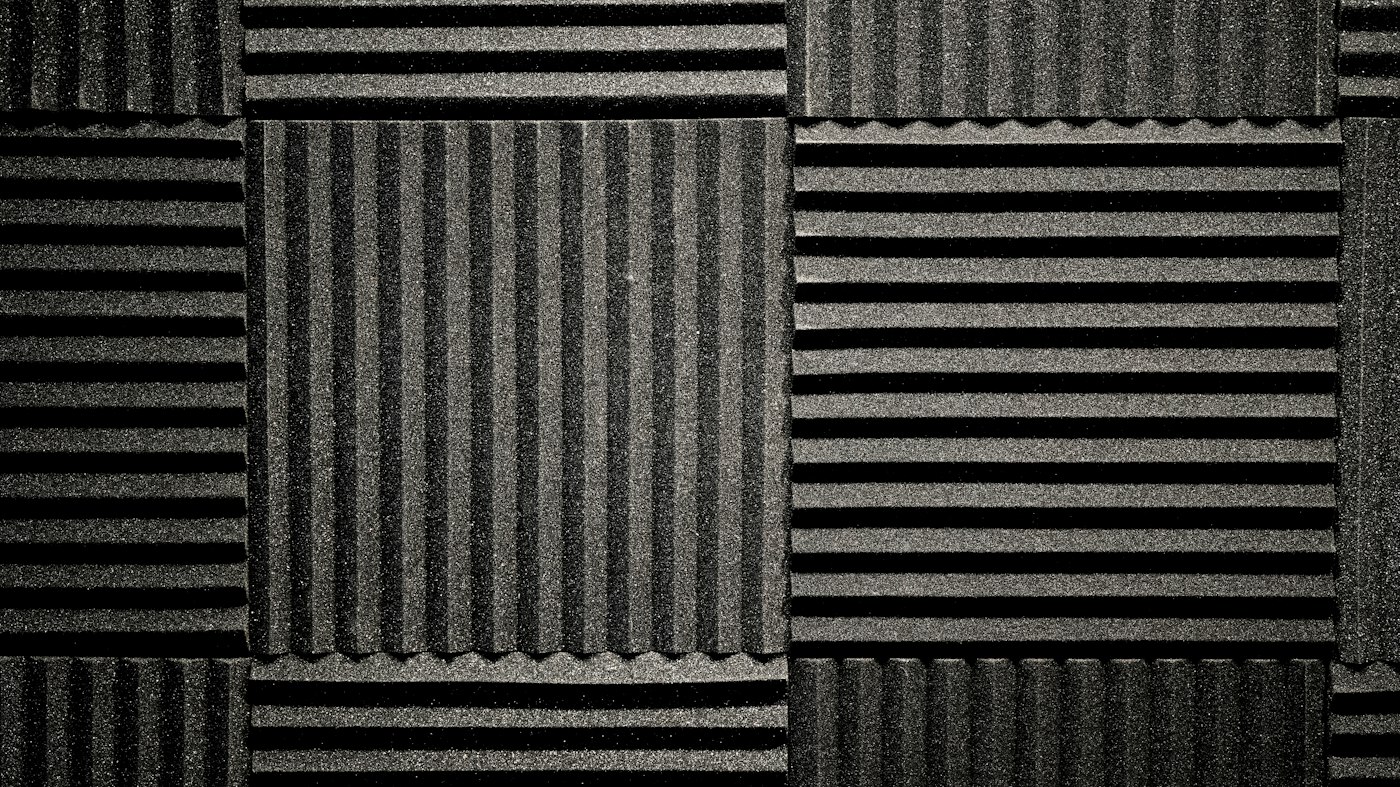
Acoustic panels are designed specifically to absorb sound reflections. They make your voice clearer on calls and recordings and reduce the hollow sound many home offices have.
Where to put them
- First reflection points: On the walls beside and in front of your desk, where sound from your voice first bounces back.
- Behind your monitor or camera view: Reduces echo picked up by microphones, and can look tidy on video.
- Behind you: Helpful in rooms with a large bare wall at your back.
- Ceilings: In rooms with hard, high ceilings, panels or clouds overhead can help.
Choosing panels
Panels come in fabric-wrapped, foam, wood-slat and decorative styles. Thicker panels generally absorb a wider range of sound. Choose fire-rated products where possible and mount them securely. Remember that panels reduce echo inside the room; they do little to block sound passing through walls.
When Bigger Changes Make Sense
If noise is coming through shared walls or from the floor above, and the steps above are not enough, construction-level options include adding insulation in wall cavities, adding a layer of dense drywall with a damping compound, or using resilient mounting systems that decouple drywall from framing. These are more involved projects and are best planned with a pro, especially if wiring or HVAC is affected.
Common mistakes to avoid
- Installing acoustic foam and expecting it to block noise from the next room.
- Upgrading the door but leaving a large gap underneath.
- Hanging a heavy solid-core door on hinges and screws that cannot support it.
- Sealing a room so tightly that heating and cooling airflow suffers.
- Placing panels randomly instead of at reflection points.
What to Do This Week
- Knock on your office door. If it sounds hollow, plan a solid-core replacement.
- Check for light under and around the door and add seals and a sweep.
- Add a large rug with a thick pad if the floor is hard.
- Clap your hands in the room. If you hear echo, plan acoustic panels at reflection points.
- Note which noises bother you most and where they come from.
We install solid-core doors, seals and panels, and can help with bigger wall upgrades if you need them. AX Home Pro handles repairs, improvements and maintenance for homeowners. Request an estimate to get started.