
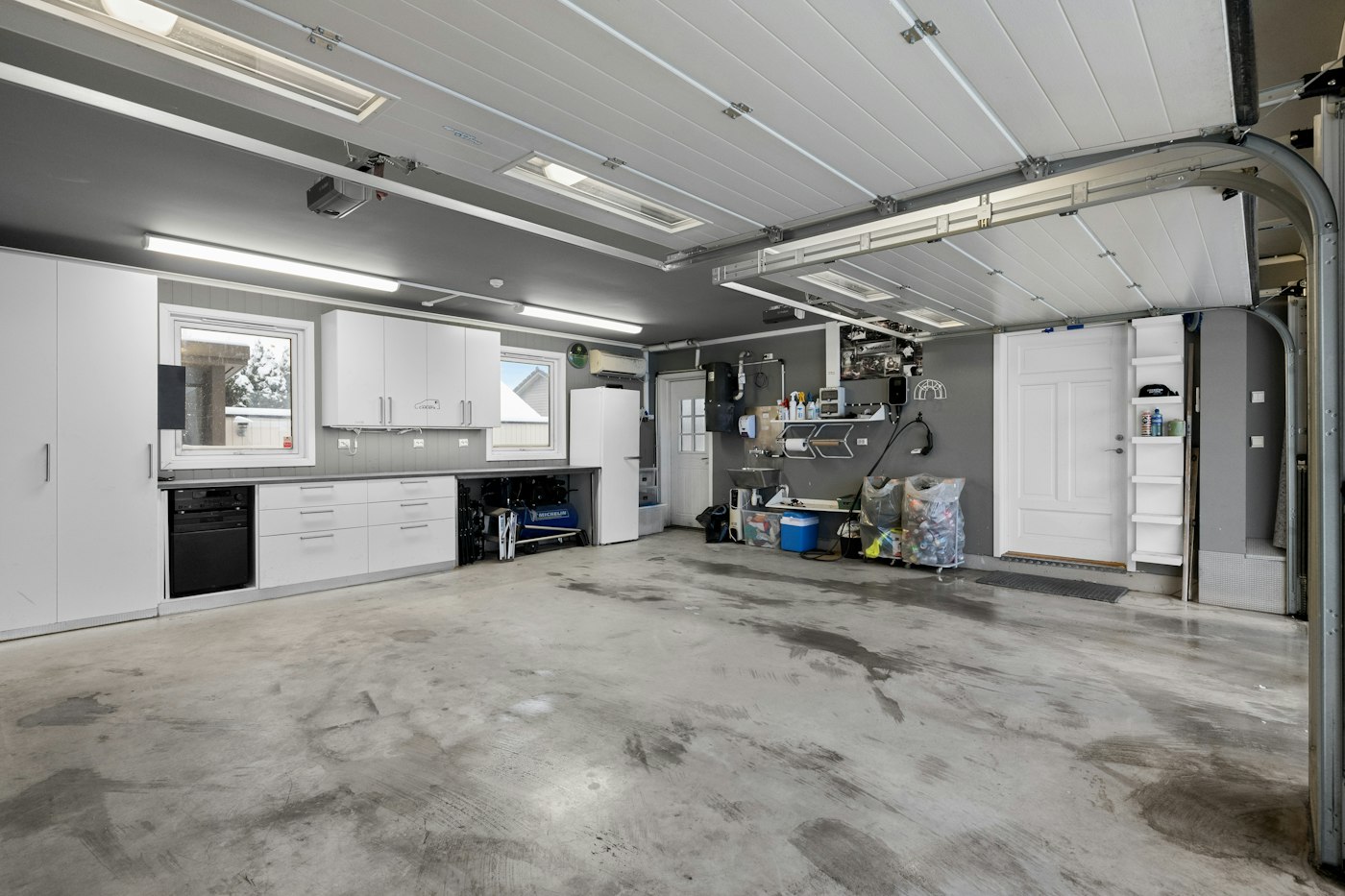
Open shelves are handy in a garage, but they collect dust and put everything on display, including chemicals that should be out of children’s reach. Cabinets with doors keep the space tidier and safer. A garage is a tough environment, though, with summer heat, winter cold, humidity, road salt and heavy tools, so cabinets designed for a kitchen are not always the right answer. The material makes a big difference in how long garage cabinets last.
Steel Cabinets
Steel cabinets with a powder-coated finish are the most common heavy-duty choice. They are strong, will not burn and are unaffected by humidity as long as the finish stays intact. Thicker steel, indicated by a lower gauge number, resists dents and sagging under load. Look for reinforced shelves, sturdy hinges and doors that close squarely. Scratches that expose bare metal can rust, especially in damp garages, so touch them up promptly. Steel cabinets can be noisy when doors close, and lighter-gauge products may flex.
Plastic Resin Cabinets
Molded resin cabinets resist moisture, rust and many chemicals, and they are light and easy to clean, which makes them appealing in humid climates and for pool and garden supplies. They are generally less rigid than steel, and shelves can sag under heavy loads. Some resin products soften or warp in extreme heat, so check the manufacturer’s temperature guidance if your garage gets very hot in summer.
Wood-Based Cabinets
Cabinets made from plywood, MDF or particleboard with a melamine or painted finish look finished and furniture-like, and they are easy to customize. Plywood holds up best to garage conditions. Particleboard and MDF are vulnerable to moisture and can swell if water from a wet car, a leaking water heater or a hosed-down floor reaches their edges. If you choose wood-based cabinets, keep them off the floor on legs or wall mounting, seal the edges and avoid spots where water collects.
Features That Matter in Any Material
- Elevation: wall-mounted cabinets or units on adjustable legs stay clear of puddles and make sweeping easier.
- Locks: lockable doors keep pesticides, pool chemicals and power tools away from children.
- Load ratings: check shelf and cabinet weight limits, and fasten wall cabinets to studs with appropriate hardware.
- Worktops: a run of base cabinets with a sturdy top, such as butcher block, steel or laminate, doubles as a workbench.
- Clearance: leave room for car doors to open, and keep cabinets clear of the overhead door tracks.
Planning the Layout
Map where the cars park, where the doors to the house and yard are and which items you use most. Tall cabinets suit the back wall or corners, while shallow units fit along the sides where car clearance is tight. Store heavy items low and seasonal items high. Leave space near outlets for charging tool batteries, and add lighting so cabinet contents are easy to see. A well-planned cabinet wall can make a garage feel twice as organized without taking up more floor space. If you would like help designing yours, reach out through our contact page.
A Step-by-Step Plan for a Garage Cabinet Wall
Good garage storage starts long before cabinets are delivered. This is the sequence we follow with homeowners.
- Empty and sort. Pull everything out and sort it into groups: lawn and garden, automotive, tools, sports and recreation, seasonal decorations, household overflow and items to discard or donate. The groups tell you how much and what kind of storage you need.
- Measure the walls and the cars. Measure each wall, the ceiling height and the space between the cars and the walls with doors open. Note windows, outlets, the electrical panel, the water heater and the overhead door tracks.
- Decide on zones. Group storage by use. Garden supplies near the yard door, sports equipment near the overhead door, household overflow near the door into the house and tools near the workbench.
- Choose the material and style. Use the conditions in your garage, including heat, humidity and the likelihood of water on the floor, to choose among steel, resin and wood-based cabinets.
- Plan power and lighting. Add outlets at workbench height for tools and chargers, and bright lighting over the cabinet wall and work area.
- Install securely. Wall cabinets should be fastened into studs or a mounting rail rated for the load, and base cabinets should be leveled so doors close properly.
What to Store Where
- Locked cabinets: pesticides, fertilizers, pool chemicals, automotive fluids, paint and power tools.
- Tall cabinets: long-handled tools such as rakes and brooms, and bulky items like coolers.
- Base cabinets with drawers: hand tools, hardware and small supplies, organized so you can see everything at a glance.
- Upper cabinets: seasonal items and lightweight supplies used occasionally.
- Open hooks or wall panels near cabinets: bikes, ladders, hoses and frequently used tools.
Mistakes to Avoid
- Blocking the electrical panel or water heater. These need clear access for safety and service. Plan cabinets around them, not in front of them.
- Storing flammable liquids near ignition sources. Keep gasoline and solvents in approved containers away from water heaters, furnaces and other appliances with flames or sparks.
- Setting cabinets too deep along the sides. Deep cabinets beside a parking space can make it impossible to open car doors comfortably.
- Using kitchen cabinets on the floor. Old kitchen cabinets set directly on a garage slab often swell and fall apart after a few wet seasons.
- Overloading upper shelves. Heavy items stored high are hard to reach and dangerous if a shelf fails.
Questions Homeowners Ask
Should I insulate or condition my garage before adding cabinets?
It is not required, but insulation and weatherstripping moderate temperature swings and humidity, which helps both cabinets and stored items last longer.
Are wall track systems a good alternative?
Track and slatwall systems are flexible and pair well with cabinets, holding items that do not fit easily behind doors, such as bikes and garden tools.
Can I add cabinets to a garage I might convert later?
Yes. Choose wall-mounted or freestanding units that can be moved or reused rather than built-ins tied to the current layout.
How do I keep cabinets clean in a dusty garage?
Doors that close tightly keep most dust out. Wipe exteriors with a damp cloth and mild cleaner a few times a year, and sweep or blow out the floor beneath raised cabinets so debris does not build up underneath.


