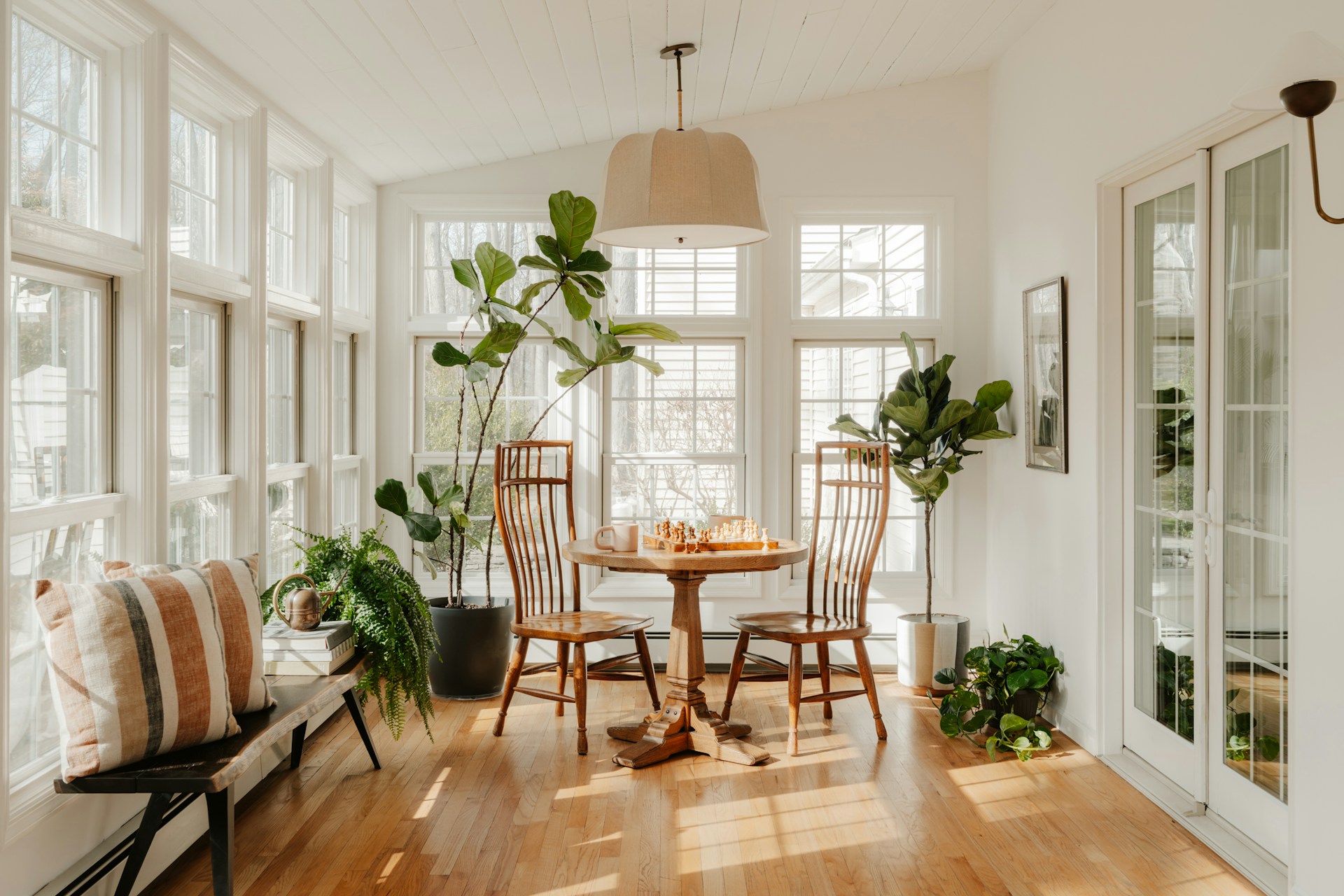
Sunrooms, garden rooms and family rooms with big doors to the patio are some of the most loved spaces in a house during summer. They are also some of the hardest on flooring. Direct sun bleaches and heats surfaces, people come and go with wet feet and sandy shoes, and in rooms that are not fully heated and cooled, temperatures and humidity swing widely. Choosing a floor that handles all of that keeps these rooms easy to enjoy.
What these rooms put a floor through
- Ultraviolet light and heat from large windows, which can fade or shift the color of many materials and make some expand.
- Grit tracked in from patios and pools, which acts like sandpaper on soft finishes.
- Water from wet swimsuits, damp pets, plant watering and doors left open in the rain.
- Temperature and humidity swings in three-season rooms that are not climate controlled.
Porcelain tile and natural stone
Porcelain tile is a top choice for sun-filled and indoor-outdoor rooms. It does not fade, it resists water and scratches, and it stays stable through temperature changes. Many manufacturers make matching indoor and outdoor versions of the same tile, with a more textured surface and a thicker body for outdoor use, which allows a floor that seems to flow straight through the doors onto the patio.
Natural stone such as slate, travertine and limestone offers a similar connection to the outdoors, with natural variation. Stone generally needs sealing and periodic care, and some types are softer or more porous than others, so ask about the specific stone.
Concrete, wood and vinyl
Sealed or polished concrete, common in modern homes and slab-on-grade sunrooms, is durable and handles sand and water well. It feels hard and cool, which suits warm climates.
Wood brings warmth but faces its toughest test here. Sunlight changes the color of most species over time, darkening some and lightening others, and grit and wet feet wear finishes quickly. If you choose wood, engineered products tend to be more stable, and window treatments that limit direct sun help.
Vinyl plank and tile handle water well and are comfortable underfoot, but many products carry manufacturer limits on direct sunlight and temperature extremes, since some vinyl expands in heat. Check the warranty carefully for sunroom use and look for products rated for it.
Details that protect any floor
A durable mat inside and outside every patio door catches most grit before it reaches the floor. Indoor-outdoor rugs define seating areas and tolerate damp. Window films and shades that block ultraviolet light slow fading in rooms with a lot of glass. Felt pads keep frequently moved chairs from scratching.
The threshold deserves attention, too. Where a sunroom floor meets a patio door, the transition should be smooth enough to avoid trips and detailed so rain drains outside, not under the floor.
Choosing for your room
Start by deciding how the room will be used and whether it is heated and cooled year-round. A four-season room that functions like any other living space can take many materials. A three-season porch room with big temperature swings narrows the field to tile, stone, concrete and products rated for those conditions. When in doubt, read the manufacturer’s installation requirements before falling in love with a sample.
A Decision Guide for Your Room
Answering a few questions narrows the field quickly and keeps you from falling for a material that will not suit the space.
- Is the room heated and cooled year-round? If yes, most interior flooring is possible. If not, focus on porcelain, stone, concrete and products rated for unconditioned spaces.
- How much direct sun reaches the floor? Strong sun favors materials that do not fade or expand, such as porcelain and concrete.
- How often will wet feet come through? Rooms next to a pool or used as a path from the yard need water resistance and a textured, slip-resistant surface.
- Do pets use the room? Hard, scratch-resistant surfaces handle claws and muddy paws better.
- Do you want the floor to continue outside? If so, look for porcelain with matching indoor and outdoor versions.
- How should it feel? If the room is a cozy reading spot, a softer floor with rugs may matter more than durability.
Planning a Seamless Indoor-Outdoor Floor
Running a matching floor from a sunroom or family room onto a patio is one of the most striking ways to connect the spaces. It takes some careful coordination.
- Match the heights. The indoor floor and the outdoor surface should sit close in height to keep the transition smooth, while still allowing the patio to drain away from the house.
- Plan the door threshold. Doors need sills designed to keep water out. Choose a door and threshold that work with the floor heights you want.
- Use the right tile on each side. Indoor and outdoor versions of the same tile often differ in texture and thickness. Use outdoor-rated tile outside.
- Slope the patio. Outdoor surfaces must drain away from the house, even if the indoor floor is level.
- Align the grout lines. Running the same layout through the doorway reinforces the continuous look.
Common Mistakes in Sunrooms
- Choosing vinyl without checking the sun rating. Some products can expand, fade or warp in direct sun.
- Polished surfaces near the pool. Smooth tile or stone can be dangerously slippery when wet.
- Solid wood in a three-season room. Big swings in temperature and humidity are hard on solid wood.
- Dark floors in full sun. Dark surfaces absorb heat and can become uncomfortably warm underfoot.
- No plan for mats. Without mats, grit wears finishes fast.
Questions Readers Ask
Can I use outdoor tile inside?
Often, yes. Outdoor tiles are typically more textured, which can be helpful near pool doors, though they may be a little harder to clean than smooth indoor tile.
What about radiant heat in a sunroom?
Tile, stone and concrete work well with radiant heat, which can make a sunroom comfortable in cooler months. Check the flooring manufacturer’s guidance.
Is there a soft option that handles water?
Some vinyl products and indoor-outdoor rugs offer softness with water resistance. Check ratings for sun and temperature before choosing.
How do I keep stone looking good?
Seal it as recommended for the type of stone, clean with products designed for stone and avoid acidic cleaners, which can etch some materials.