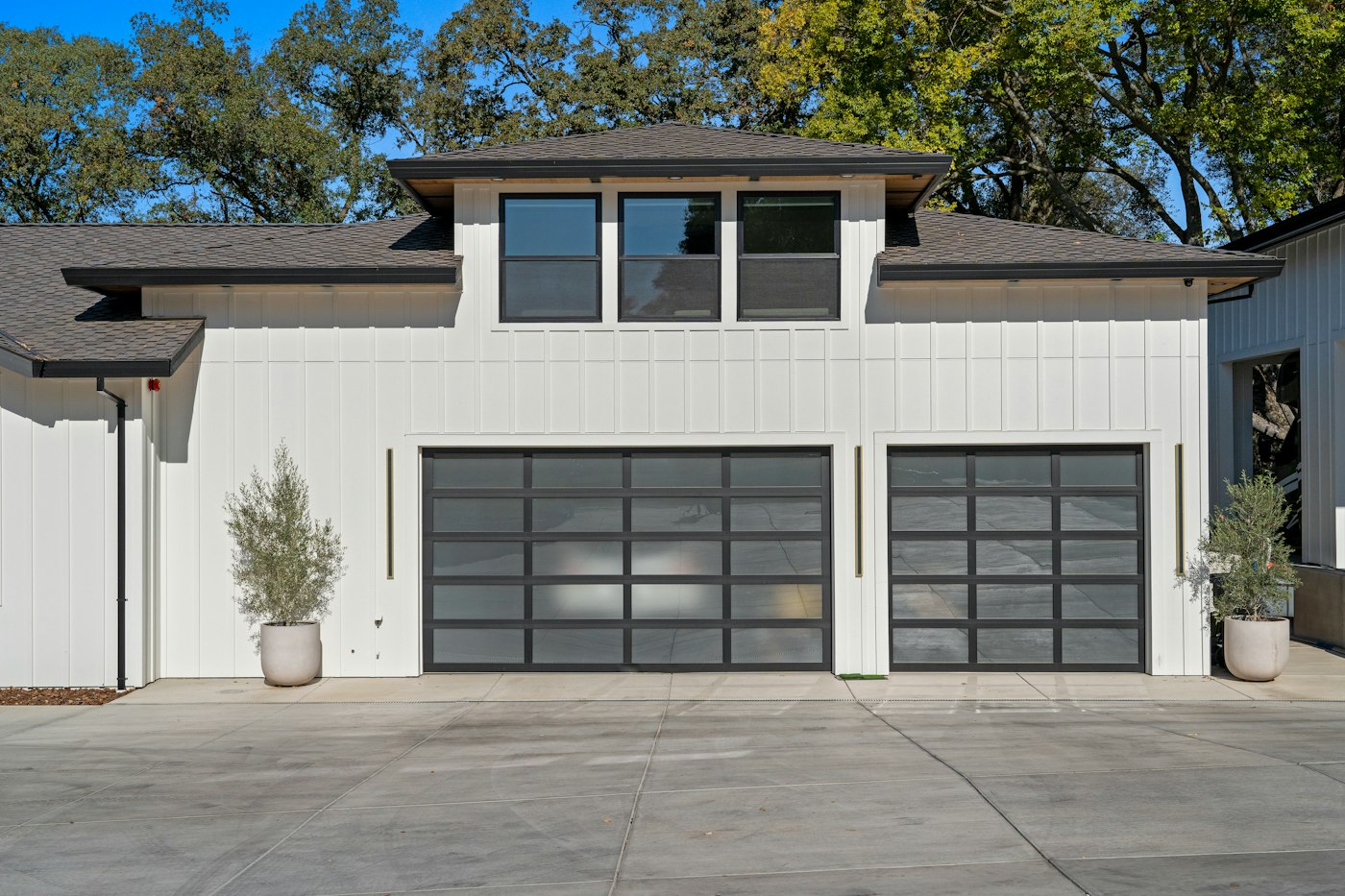
On many houses, the garage door takes up more of the front facade than the entry door, the windows or the porch. That makes it one of the most visible parts of the home and one of the most effective places to change its character. A new garage door can also make an attached garage quieter, more comfortable and more secure. Here is what to weigh when choosing one.
Styles
- Raised-panel doors have the familiar rectangular panels and suit a wide range of traditional homes.
- Carriage-house doors are designed to look like old swing-out barn or carriage doors, with vertical boards, decorative handles and strap hinges, though they open overhead like any sectional door.
- Flush or flat-panel doors have smooth or subtly grooved faces for a clean, contemporary look.
- Full-view doors use aluminum frames with glass or polycarbonate panels, popular on modern homes and for garages used as workshops or gyms.
Look at the door in relation to the whole house rather than in isolation. A door that echoes the trim, window grilles or siding pattern helps the garage read as part of the design instead of a blank wall.
Materials
Steel is the most common garage door material. It is strong, relatively affordable and available in many styles, colors and woodgrain finishes, and heavier gauges or multiple layers resist dents better. Aluminum is lighter and does not rust, which suits full-view and coastal installations, though it dents more easily.
Real wood doors offer unmatched warmth and detail, but they are heavy and need regular refinishing. Composite and fiberglass doors can replicate wood grain with less maintenance, and some resist moisture and salt air well.
Insulation
Garage doors range from a single layer of steel to sandwiched designs with insulation inside. Insulated doors keep an attached garage closer to the temperature of the house, which matters if you work in the garage, store temperature-sensitive items there or have living space above or beside it. They also tend to be quieter and stiffer.
The insulation is usually polystyrene panels or injected polyurethane foam, which bonds to the door skins and adds rigidity. Manufacturers publish insulation ratings, but the seals around the door matter, too. Weatherstripping at the bottom and sides keeps out drafts, rain and pests.
Windows and openers
Windows in the top section bring daylight into the garage and add character from the street. Options include clear, frosted and textured glass, and grille patterns that match the home’s windows.
Openers have improved as well. Belt-drive openers run more quietly than chain-drive units, a real benefit when a bedroom sits over the garage. Wall-mounted openers free ceiling space for storage. Many now offer smartphone control, battery backup and built-in lighting. Modern openers also use safety sensors, typically photo eyes near the floor, that stop and reverse the door if something crosses its path, and they are worth testing periodically.
Leave the springs to professionals
Garage doors are counterbalanced by springs under very high tension, and adjusting or replacing them can cause serious injury. Installation and spring work belong with trained technicians. When comparing quotes, ask about the door’s construction, insulation, warranty and included hardware, and look at samples in person, since colors and textures can look different in sunlight than on a screen.
Measuring and Preparing the Opening
Garage doors are built to fit specific openings, and the space around the opening matters as much as the opening itself. Before shopping, gather these measurements, or have them confirmed during a site visit:
- Width and height of the opening, measured at the finished framing.
- Headroom, the distance from the top of the opening to the ceiling or the lowest obstruction above it. Low headroom may call for special track or spring hardware.
- Side room, the space on each side of the opening for track and springs.
- Backroom, the depth from the door opening toward the back of the garage, which must accommodate the door when open and the opener rail if one is used.
- Obstructions such as light fixtures, storage racks, ductwork, water heaters or beams that might interfere with the door’s travel.
It is also a good time to look at the jambs and header. Rotted or damaged framing around the opening should be repaired before a new door is mounted, and new exterior trim and weatherstripping can be part of the project.
Matching the Door to How You Use the Garage
Garages serve many purposes, and the right door depends on yours.
Parking and storage only
A durable, well-sealed door in a style that suits the house may be all you need. Insulation is still worth considering if the garage is attached and shares a wall with living space.
Workshop, gym or hobby space
An insulated door with good seals helps keep the space usable in summer and winter. Windows add daylight, and a quiet opener matters if you work early or late.
Room above or beside the garage
A quiet opener, an insulated door and solid seals reduce noise and drafts in the living space. Consider a wall-mounted opener to reduce vibration through the ceiling.
Homes facing storms and wind
In areas where high winds are a concern, ask about wind-rated doors and reinforcement. Local building codes may set requirements for garage doors in these areas, and a door that fails in a storm can let wind into the garage and put pressure on the rest of the house.
Mistakes to Avoid
- Choosing color from a small chip. A garage door covers a large area. View samples outside in daylight, at several times of day, and against the siding.
- Overlooking the opener. An old opener paired with a new, heavier insulated door may struggle. Ask whether the existing opener is suitable.
- Skipping the bottom seal. A gap under the door lets in water, leaves and pests. Uneven floors may need a threshold seal or a different bottom gasket.
- Ignoring the side door and windows. If the garage is meant to stay comfortable, the service door and any windows need weatherstripping too.
- Trying spring work yourself. Springs and cables under tension can cause serious injury. Leave them to trained technicians.
Keeping a New Door Working Smoothly
- Test the safety reversal and photo eyes regularly following the opener manufacturer’s instructions.
- Look over cables, rollers and hinges for wear, and call a technician if anything looks frayed or bent.
- Lubricate moving parts as the manufacturer recommends, using the products it specifies.
- Wash the door’s exterior a few times a year, especially near salt air, to remove grime and salt.
- Keep the photo eyes clean and aligned, since dirt or a bump can stop the door from closing.
Questions Homeowners Ask
Should I replace the opener when I replace the door?
Not always. If the opener is old, noisy or lacks modern safety features, replacing both at once can be convenient. If it is newer and suited to the door’s weight, it may be fine.
Can I add windows to an existing door?
Some manufacturers offer window sections that can replace a top panel, but it depends on the door. Often it makes more sense to choose windows with a new door.
Is an insulated door worth it for a detached garage?
It depends on how you use the space. For storage alone, it may not matter much. For a workshop or hobby room, it can make a real difference.