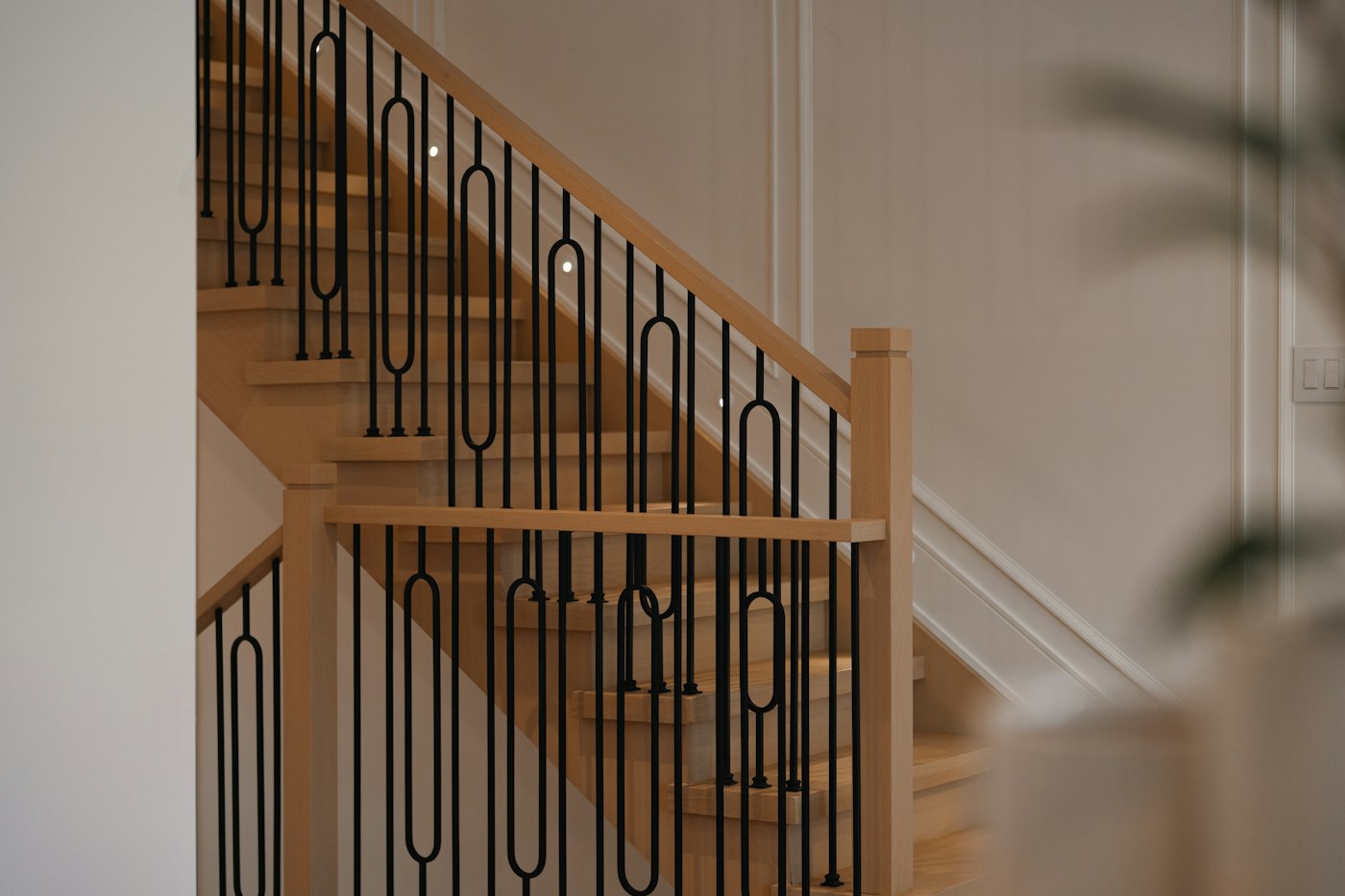
In many homes, the staircase is one of the first things people see when they walk in. It connects floors, anchors the entry and often takes up a surprising amount of visual space. Yet stairs are often overlooked in remodeling plans. Updating them can refresh a home’s character and improve safety at the same time.
Know the Parts of a Staircase
Understanding a few terms makes it easier to plan and discuss updates:
- Treads: The horizontal surfaces you step on.
- Risers: The vertical pieces between treads.
- Nosing: The front edge of a tread that projects slightly past the riser.
- Stringers: The structural boards that support the treads and risers.
- Balusters: The vertical posts that support the handrail, sometimes called spindles.
- Newel posts: The larger posts at the top, bottom and turns of a staircase.
- Handrail: The rail you hold onto as you go up and down.
Refreshing Treads and Risers
Carpeted stairs can sometimes be uncovered to reveal hardwood treads, though not always; some stairs were built with lower-grade materials intended to be carpeted. Stair treads can be replaced with new hardwood, or retrofit treads can sometimes be installed over existing ones. Painting the risers a contrasting color, such as crisp white with stained treads, is a classic look that also helps make each step easier to see. Matching new stair treads to adjacent hardwood floors creates a cohesive appearance.
Updating Railings and Balusters
Replacing balusters is one of the most dramatic stair updates. Wood balusters can be swapped for iron or metal, or simplified from ornate turned shapes to clean square profiles. Cable rail and glass panels can create a very open, modern look. Newel posts and handrails can be refinished or replaced to match. Railings must meet safety requirements, which commonly include rules about railing height and the spacing between balusters. These rules vary by jurisdiction, so check with your local building department or a qualified professional before making changes.
Safety Improvements
Stairs are a common place for falls, so safety upgrades are worthwhile, especially for households with young children or older adults.
- Add a second handrail where feasible, so both hands have support.
- Make sure handrails are graspable and securely anchored.
- Fix loose treads, worn carpet or slippery finishes.
- Use contrasting colors or nosing strips to make step edges visible.
- Avoid loose rugs at the top and bottom of the stairs.
Light the Way
Good lighting makes stairs safer and more attractive. Light switches at both the top and bottom allow you to turn lights on before using the stairs. Low-level step lights or wall-mounted lights along the staircase can illuminate treads without glare. In homes with an open staircase, a statement pendant can light the space and become a focal point. Electrical work should be done by a licensed electrician according to local code.
A staircase update can transform the feel of an entry while making daily life safer. If you are considering stair improvements, reach out through our contact page.
Planning a Staircase Update Step by Step
Because stairs are a structural, safety-critical part of the home, a little planning prevents a lot of rework. Here is the order we usually follow.
- Assess what you have. Lift a corner of carpet, look at the underside of the stairs if they are open from a basement, and check for squeaks, loose treads or a wobbly railing. These findings shape everything else.
- Decide on the scope. A cosmetic refresh might mean paint, stain and new balusters. A larger update might replace treads, risers, newels and the handrail together.
- Coordinate with flooring. If new floors are going in at the top or bottom of the stairs, plan the tread species, stain and nosing profile to match or complement them.
- Check requirements. Before changing railings or tread dimensions, confirm what your local building department requires for height, spacing and graspability.
- Plan the lighting and switches. If walls will be opened, that is the time to add step lights, wall sconces or three-way switching.
- Sequence the work. Treads and risers usually come before railings and balusters, and finishing comes last so new surfaces are not damaged during installation.
Matching the Stair to the Home’s Style
Traditional and Colonial-Style Homes
Turned balusters, painted risers, stained oak or maple treads and a substantial newel post feel at home here. Updating an existing traditional stair often means refinishing and tightening rather than reinventing.
Craftsman and Farmhouse Homes
Square balusters, chunky newels and simple, sturdy handrails suit these styles. Warm wood tones and painted white or soft-colored risers keep the look grounded.
Modern and Transitional Homes
Slim metal balusters, cable rail or glass panels paired with clean, square-edged treads create an open, airy staircase. Matte black or brushed metal balusters are a popular way to modernize an older stair without changing its structure.
Common Stair Remodeling Mistakes
- Uneven step heights. Adding retrofit treads or new flooring at only the top or bottom step can change that step’s height compared with the others. Small differences in riser height are a known trip hazard, so the whole stair needs to be considered together.
- Slippery finishes. High-gloss finishes on hardwood treads look beautiful but can be slick in socks. Satin finishes or a well-secured runner can improve traction.
- Underestimating sanding and staining. Refinishing stairs by hand is slow, detailed work, and stairs remain out of use while finishes cure. Plan around the household’s routine.
- Removing a railing without a plan. Taking out balusters or a handrail, even temporarily, creates a fall hazard. Keep work areas blocked off until new railings are secure.
Carpet, Runners or Bare Wood?
Each option has trade-offs. Wall-to-wall carpet softens footsteps and adds grip but hides the wood and wears quickly at the nosing. A runner shows off wood treads at the edges while still providing traction and some sound control, and it is easier to replace than full carpet. Bare wood is beautiful and easy to sweep but can be louder and more slippery. Many households choose a runner as a balance between looks and safety.
Staircase Questions We Hear
Can I paint my stair treads?
You can, but painted treads take heavy abuse. If you paint them, use a durable floor-rated product and consider adding a runner to reduce wear.
How do I quiet a squeaky stair?
Squeaks usually come from treads rubbing against risers or stringers. Depending on access, they can often be addressed by securing the tread from above or below. Persistent squeaks are worth having checked, since they may indicate a loose component.
Is it worth adding a second handrail?
For many households, yes. A rail on both sides helps anyone carrying something, recovering from an injury or simply wanting more stability, and it is often a modest addition when other stair work is already planned.