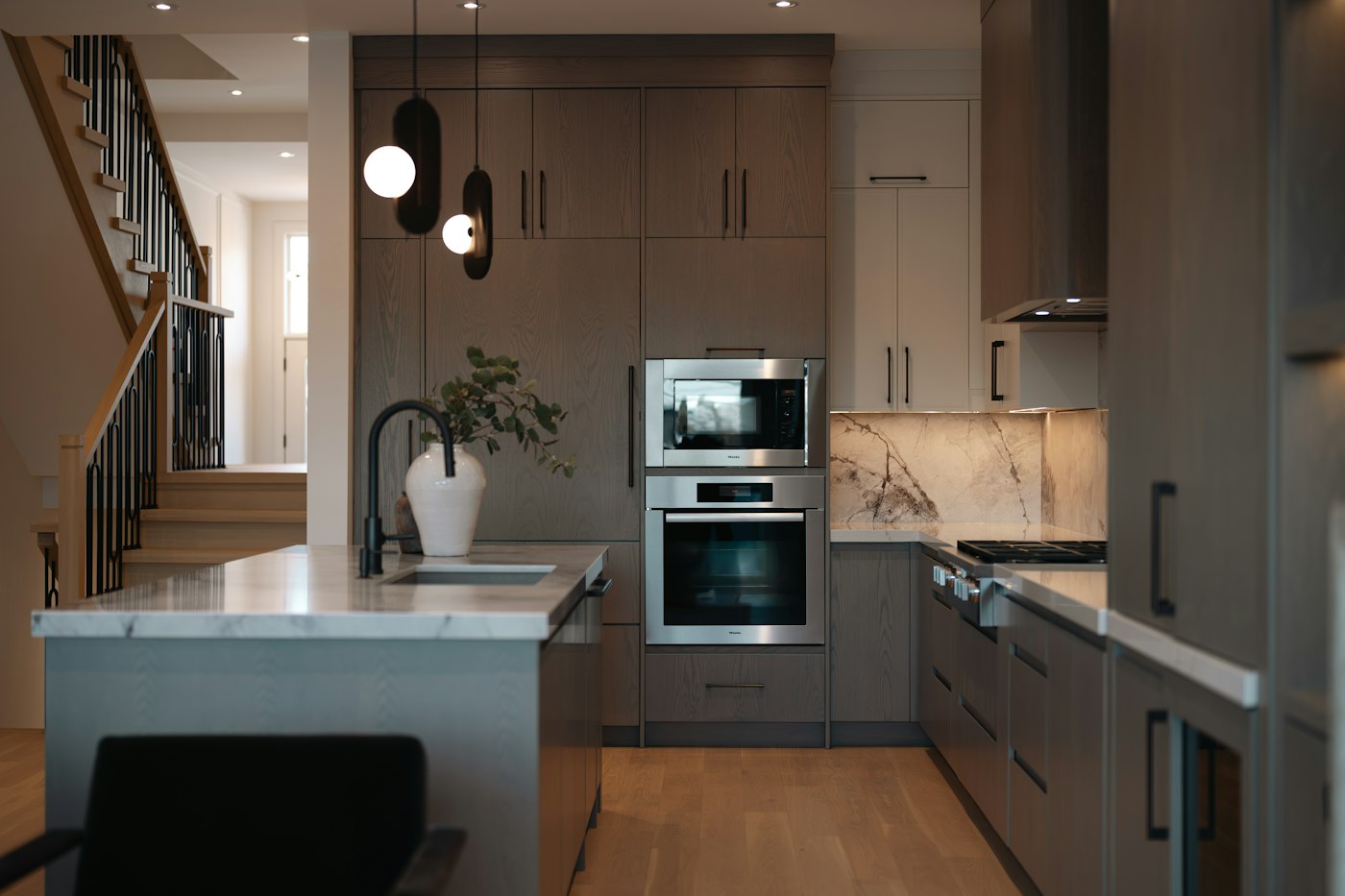
In a kitchen remodel, it is natural to get excited about cabinets and countertops first. They are the most visible parts of the room. But appliances play a quiet, essential role in how those cabinets are designed. Selecting appliances early, ideally before cabinet drawings are finalized, helps everything fit properly and work the way you expect.
Appliances Set the Dimensions
Cabinets are built around the openings left for appliances. Refrigerators, ranges, wall ovens, dishwashers, microwaves and range hoods come in different widths, heights and depths, even within the same category. A refrigerator that is a little wider or deeper than planned can create problems that are difficult to fix once cabinets are installed. Specifications listed by manufacturers, sometimes called installation guides or spec sheets, give the exact cutout and clearance dimensions designers need.
Fit Is About More Than the Box
Appliances need more than just the space they occupy. Consider:
- Door swing: Refrigerator and oven doors need room to open fully, and refrigerator doors near walls may need clearance to allow drawers inside to pull out.
- Ventilation: Some appliances require specific airflow clearances.
- Counter-depth vs. standard-depth: Counter-depth refrigerators sit nearly flush with cabinets, while standard-depth models extend past them.
- Panel-ready models: Integrated appliances that accept cabinet panels require precise coordination with the cabinet maker.
- Landing space: Counter space near the refrigerator, cooktop and microwave makes daily use easier.
Utilities Need Planning Too
Different appliances have different utility requirements. A gas range needs a gas line, while an electric or induction range needs the right electrical circuit. Wall ovens, cooktops and some refrigerators may require dedicated circuits. Refrigerators with ice makers and water dispensers need a water line. Range hoods may need ductwork to the outside. Knowing your choices early allows electricians, plumbers and other trades to plan their work accurately, following local code.
Lead Times and Availability
Appliance availability can vary, and some models take time to arrive. Ordering early helps avoid a situation where cabinets are installed and countertops are waiting on a template that requires the cooktop or sink on site. Many homeowners arrange for appliances to be delivered close to when they are needed, or stored until installation. Ask your contractor how they prefer to coordinate delivery and storage.
Choosing Appliances Thoughtfully
Start with how you cook. A household that bakes often might value double wall ovens. One that cooks quickly on weeknights might love induction. Families who entertain might want a second dishwasher or a beverage refrigerator. Think about noise, cleaning, energy use and finish. Matching finishes across appliances, or mixing them intentionally, also affects the look of the room.
Making appliance decisions early may feel like a lot to tackle at the start, but it prevents expensive changes later and helps the whole project run more smoothly. If you are beginning a kitchen remodel, reach out through our contact page.
An Appliance Selection Worksheet
A simple worksheet keeps every appliance decision organized and gives your designer and contractor exactly what they need. For each appliance, record the following:
- Brand, model number and finish
- Exact width, height and depth, including handles and any protruding parts
- Required cutout or opening dimensions from the installation guide
- Door swing direction and clearance, including whether the door can be reversed
- Utility needs: gas, electrical circuit and outlet type, water line or drain
- Ventilation requirements for the appliance or the space around it
- Panel requirements if the appliance accepts cabinet panels
- Delivery date or availability
Keep a copy of each installation guide with the worksheet. When questions come up during cabinet design or installation, the answers are already in hand.
Choosing Appliances in the Right Order
- Cooking appliances. Decide between a range or a separate cooktop and wall ovens, and choose the fuel type. This affects cabinet layout, utilities and ventilation more than any other choice.
- Range hood. Select the hood once the cooking surface is set, so its width, style and ducting can be planned.
- Refrigerator. Choose the size, style and depth. Built-in and panel-ready models need early coordination with the cabinet maker.
- Dishwasher. Most fit a standard opening, but panel-ready models and drawer-style units need specific planning.
- Microwave. Decide whether it will go over the range, in a drawer below the counter, in a wall cabinet or on the counter.
- Specialty appliances. Beverage refrigerators, warming drawers and other extras round out the plan if space and budget allow.
Mistakes That Come From Choosing Appliances Late
A refrigerator that sticks out or will not fit
If cabinets are built around one depth and a different refrigerator arrives, it may protrude more than expected or fail to fit the opening entirely.
A range that needs a different utility
Switching from gas to induction, or the reverse, after rough-in work means reworking utilities. Deciding early avoids redoing completed work.
A hood that does not match the cabinet above
Hood dimensions affect the upper cabinet above the range. A late change can leave an awkward gap or an opening that does not fit.
Doors that collide
An appliance door that hits an adjacent cabinet, wall or island can make the kitchen frustrating to use every day.
Appliance Questions Homeowners Ask
Can I keep my existing appliances? Yes, if they fit the new layout and are in good condition. Share their model numbers and dimensions early so the cabinets are designed around them.
Is it risky to buy appliances before cabinets are ordered? Many homeowners purchase appliances early and arrange delivery for later, so the dimensions are locked in. Ask the retailer about storage or delayed delivery options.
What if a model is discontinued before delivery? It happens occasionally. Having the exact dimensions and utility requirements on hand makes it easier to find a suitable replacement that fits the planned openings.
Do panel-ready appliances cost more to install? They require more coordination and precise cabinet work, which can add to the scope. The result is a seamless look that many homeowners value.
Should all appliances be the same brand? It is not required. Matching brands can simplify finishes and styling, but many kitchens mix brands to get the features that matter most in each appliance.
Locking in appliance choices early can feel like a big commitment, but it is one of the simplest ways to keep a kitchen remodel on schedule. Every measurement that follows, from cabinet widths to countertop cutouts, builds on those decisions.