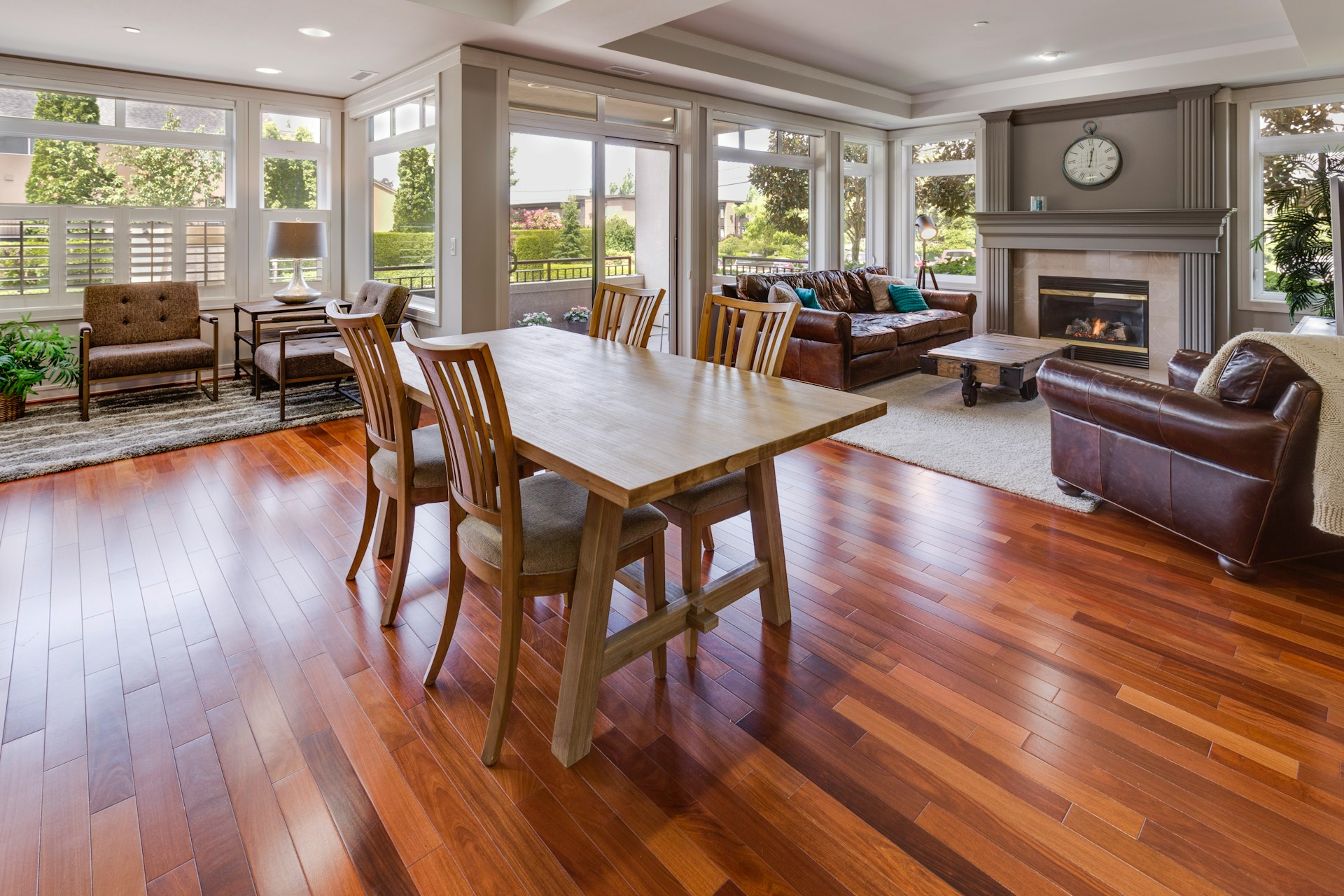
Few flooring products have improved as much in recent years as porcelain tile made to look like wood. Early versions looked like photographs of boards printed on tile. The best of today’s products capture grain, knots, texture and color variation convincingly enough that guests may need to touch the floor to tell. For rooms where water, humidity or heavy wear rule out real wood, wood-look porcelain is a compelling alternative.
Where it makes the most sense
Porcelain is dense and absorbs very little water, so it is at home in places that challenge wood.
- Bathrooms, laundry rooms and mudrooms where water reaches the floor.
- Basements and slab-on-grade homes where moisture from concrete is a concern.
- Sunrooms and rooms that open to a pool or patio, where sand, wet feet and strong sun are routine.
- Homes with large dogs, whose claws and accidents are hard on wood.
- Floors with radiant heating, since tile conducts heat well and stays stable.
It also allows one continuous look through rooms that would otherwise need different flooring, such as running the same plank-style floor from the kitchen into a bathroom.
What it is like to live with
Porcelain is hard and can feel cool underfoot, which many people welcome in summer and notice in winter. Dropped glasses are more likely to break. Area rugs and radiant heat soften both concerns. Porcelain resists scratches and stains far better than wood and never needs refinishing, though grout lines need occasional cleaning.
Check the slip-resistance rating for wet areas. Textured finishes are safer in bathrooms and entries than polished ones.
Layout, flatness and lippage
Long plank tiles are not always perfectly flat. A slight curve along their length is a normal part of manufacturing, and it matters for layout. When long planks are installed with each row offset by half a tile, the high center of one plank can sit beside the low end of the next, creating uneven edges called lippage. For that reason, many manufacturers recommend limiting the offset to about a third of the plank length or less.
The floor beneath long planks must be very flat, which may mean leveling it before tile goes down. Many installers also use leveling clip systems to keep edges aligned while the mortar cures.
Details that make it convincing
- Choose products with many unique faces so the same knot does not repeat across the room.
- Rectified tiles, which have precisely cut edges, allow narrower grout joints that read more like seams between boards.
- Match the grout closely to the tile’s base tone.
- Pull tiles from several boxes as you go to spread out color variation.
- Pick plank widths and lengths similar to real wood flooring in the style you want.
Before committing, lay out several planks from different boxes and look at them in the room’s daylight, and walk on an installed sample if a showroom has one. If you love the look of wood but live with water, sand, humidity or pets, wood-look porcelain can deliver the style with very little worry.
Planning a Wood-Look Porcelain Floor, Step by Step
A wood-look porcelain floor rewards planning more than almost any other tile project, because long planks magnify small mistakes. This is the sequence we follow.
- Choose the look in the room. Bring home several planks from different boxes, lay them out on the floor and look at them in morning and afternoon light. Showroom lighting is rarely like your house.
- Decide the direction. Planks usually look best running along the longest sightline in a room, or toward the main window or door. In connected rooms, keep one direction throughout so the floor reads as continuous.
- Check flatness. Long planks need a flatter base than small tile. A straightedge across the floor shows high and low spots that must be corrected.
- Plan the pattern. Confirm the manufacturer’s recommended maximum offset and plan transitions, doorways and where cut pieces will land. Avoid thin slivers at walls and doorways.
- Select grout and trim. Choose grout that blends with the tile’s base tone, and decide how the floor will meet other flooring, cabinets and stairs.
- Order enough material. Plan for cutting waste and breakage, and keep a few extra planks from the same production lot for future repairs.
Mistakes That Make the Floor Look Less Like Wood
- Repeating patterns side by side. When identical faces end up next to each other, the floor looks printed. Shuffle tiles from several boxes and watch for repeats as you lay out each row.
- Wide or contrasting grout joints. A dark grout line around light planks outlines every tile. Keep joints as narrow as the tile allows and match the color closely.
- Using a half offset on long planks. Besides creating lippage, it can produce a stair-step pattern that looks unnatural. A random or one-third offset reads more like real boards.
- Choosing planks too short or too uniform. Real wood floors have variation in board length and tone. Products with varied lengths or more color movement can look more natural.
- Forgetting the baseboards and transitions. Thick metal transition strips or mismatched trim can undercut the effect.
Caring for Wood-Look Porcelain
Day-to-day care is simple, but a few habits keep it looking its best.
- Sweep or vacuum regularly to remove grit, which can wear grout and dull some finishes over time.
- Damp-mop with a cleaner suited to porcelain and grout. Avoid oily or wax-based products, which can leave a film and make floors slippery.
- Clean grout lines periodically, and reseal if your grout requires it.
- Use mats at entries to catch sand and water.
- Add felt pads under furniture to prevent scuffs and protect against chipping when chairs are dragged.
Questions Readers Ask
Can wood-look porcelain go in a whole house?
Yes. Many homes use it throughout, especially those with pets, slabs or indoor-outdoor living. Some households prefer softer flooring in bedrooms, so it often comes down to comfort.
Is it difficult to replace a single cracked plank?
It is possible, but it takes care to remove one tile without damaging its neighbors. That is one reason to keep spare tiles from the original lot.
Will it feel cold?
Porcelain feels cooler than wood, which many people appreciate in summer. Rugs, slippers and radiant heat help in cooler months.
Can it go outdoors?
Some wood-look porcelain is made in outdoor versions with more texture and thickness. Use only products rated for outdoor use on patios and decks.