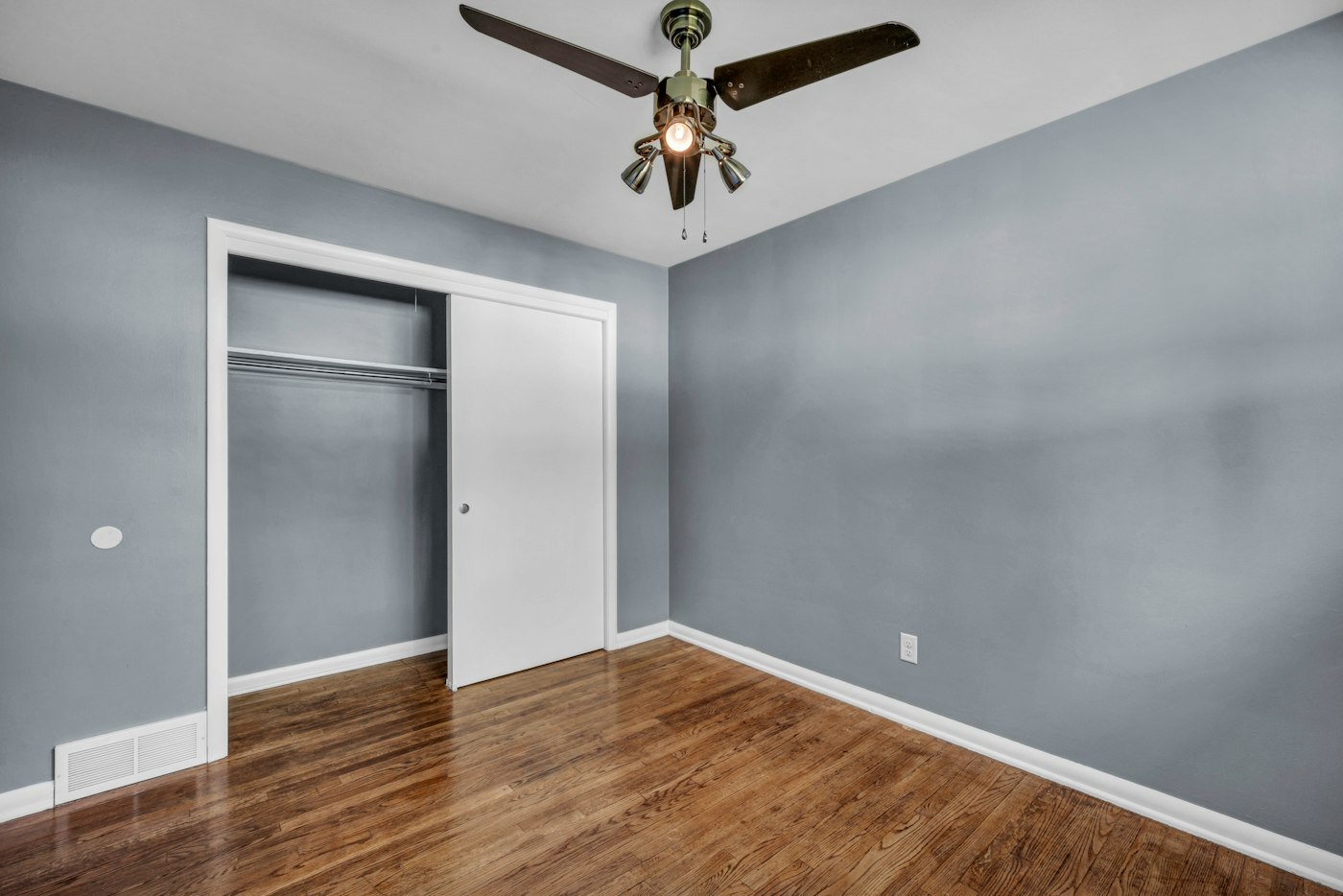
A ceiling fan is one of the least expensive ways to make a room feel more comfortable in warm weather, and one of the most commonly installed wrong. Fans that are too small, hung too low or spinning the wrong direction leave homeowners wondering why they bother. A few basics turn a fan from a decorative afterthought into a tool that lets the thermostat rest.
What a fan actually does
A ceiling fan does not lower the temperature of a room. It moves air across your skin, which speeds evaporation and makes you feel cooler, the same way a breeze does outdoors. That is why a fan running in an empty room is wasted energy. The benefit is only there when someone is under it.
Because the fan makes you feel cooler without changing the air temperature, many people find they can set the thermostat a few degrees higher in rooms with fans and stay just as comfortable, which is where the savings come from.
Sizing a fan to the room
Fan size is measured by blade span, and manufacturers publish charts matching span to room size. Small rooms like bathrooms and offices take compact fans, bedrooms and modest living rooms take mid-size models, and large great rooms need either a very large fan or more than one. An undersized fan in a big room simply cannot move enough air to matter, while an oversized fan in a small room can feel like sitting in a wind tunnel.
Ceiling height matters as much as floor area. Fans need clearance below the blades for safety and a bit of space above them to draw air efficiently. Low ceilings call for flush-mount or hugger fans. Standard ceilings use a short downrod. Tall or vaulted ceilings need longer downrods so the blades sit at a height where you can feel the breeze instead of just hearing it far overhead.
Direction and speed by season
Most fans have a switch on the housing or a remote setting that reverses the motor. In summer, the blades should spin so that air blows down on you, which on most fans is counterclockwise when you look up. In winter, the slow reverse setting pulls air up and pushes the warm layer at the ceiling back down along the walls without creating a draft.
Speed is a comfort choice. A gentle setting is enough for a bedroom at night, while a sunroom at midday may want the highest setting.
Where fans help most
- Bedrooms, where moving air improves sleep and allows a higher nighttime thermostat setting.
- Living rooms and family rooms where people sit for long stretches.
- Kitchens, where cooking heat builds, as long as the fan does not fight the range hood.
- Sunrooms, bonus rooms over garages and rooms with large west-facing windows.
- Covered porches, using a fan rated for damp or wet locations.
Details worth planning in a remodel
If you are opening ceilings anyway, have the electrician install fan-rated boxes, which are braced to carry the weight and vibration a standard light box is not designed for. Plan separate switches for the fan and its light, or choose a model with a good remote. Consider a DC motor for quieter operation and lower energy use. And think about the light fixture it may replace: a fan with a dim built-in light can leave a room gloomy, so pair it with recessed lights or lamps where needed.
Choosing a Fan Step by Step
With fans available in every style and price range, it helps to choose based on performance first and appearance second.
- Measure the room. Note the length and width and use the manufacturer’s sizing chart to choose a blade span.
- Measure the ceiling. Check the height and slope to determine whether you need a flush mount, standard downrod or longer downrod, and whether a sloped-ceiling adapter is required.
- Check airflow ratings. Look at the fan’s published airflow and efficiency information to compare models.
- Consider noise. In bedrooms and offices, choose a quiet motor and listen to the fan running if you can.
- Decide on light. Choose whether the fan should have a light, and how bright and dimmable it should be.
- Pick controls. Wall controls, remotes, pull chains or smart controls all work. Choose what is most convenient for the room.
- Choose the style. Finally, select finishes and blade styles that suit the room.
Installation Tips
- Use a fan-rated box. Standard light boxes are not designed to hold the weight and motion of a fan.
- Balance the blades. A wobbling fan is noisy and wears out faster. Most fans include a balancing kit.
- Keep clearances. Maintain safe distances from walls, cabinets and light fixtures, and keep the blades well above head height.
- Center it where people sit. In rooms with distinct zones, center the fan over the seating or bed rather than the room’s midpoint.
- Call an electrician when needed. Adding new wiring, switches or boxes is a job for a licensed professional.
Common Mistakes
- Hanging a fan too high or too low. Too high and the breeze is lost; too low and it is a safety hazard.
- Forgetting to switch direction. A fan spinning the wrong way in summer pulls air up and feels much less effective.
- Leaving fans running in empty rooms. Turn them off when you leave. Fans cool people, not rooms.
- Choosing by looks alone. A beautiful fan that moves little air will not deliver comfort.
- Ignoring cleaning. Dusty blades can drop dust and reduce efficiency. Wipe them a few times a year.
- Placing a fan near a ceiling light. Blades spinning under or beside a light fixture can create a distracting flicker. Keep them apart or rely on the fan’s own light.
- Mismatched fans in open spaces. In a large open room with two fans, choose matching models so they look intentional and run at similar speeds.
Questions Homeowners Ask
Can a fan go in a room with a sloped ceiling?
Yes, with a sloped-ceiling adapter and a downrod long enough to keep the blades clear of the slope.
Are DC motor fans worth it?
Many homeowners appreciate DC fans for their quiet operation, more speed settings and lower energy use, though they often cost more upfront.
Should every bedroom have a fan?
Many families find a bedroom fan one of the most used comfort features in the house. If you are remodeling, we are glad to plan fan-rated boxes and switches wherever you might want one.