
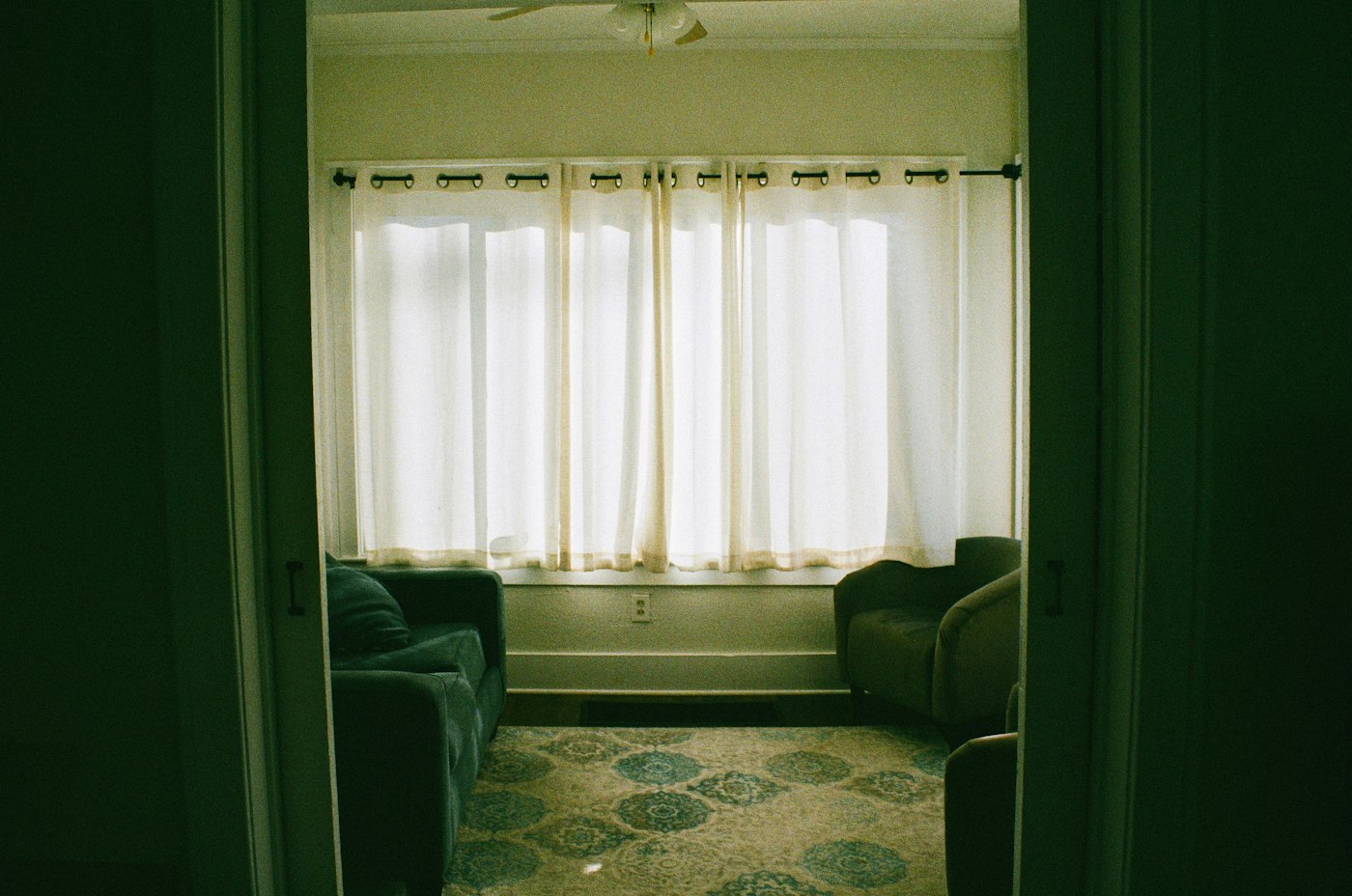
Drapery is often chosen for color, pattern and softness, and those are good reasons. But a well-made set of curtains can also make a sunny room more comfortable in summer. Fabric hung in front of a window intercepts sunlight before it reaches floors and furniture, and a closed panel slows the movement of heat from hot glass into the room. How much it helps depends on details that are easy to overlook: the lining, the fullness of the panels and the way they are mounted.
Linings Do Most of the Work
The face fabric sets the look, but the lining behind it determines much of the performance.
- Standard linings, usually a cotton or polyester sateen, protect the face fabric from sun and give the panel more body.
- Thermal linings have a foam or coated backing designed to slow heat transfer and block more light.
- Blackout linings stop nearly all light, which also cuts the sunlight that would otherwise become heat inside. Many are thermal as well, but check the product description rather than assuming.
- Interlinings, a soft layer sewn between the face and the lining, add insulation, weight and a richer drape.
A light-colored lining facing the window reflects more sunlight back out than a dark one. That is one reason many lined drapes show white or ivory to the street, which also gives the house a tidy, uniform look from outside.
Fullness and Length
Fullness is the ratio of fabric width to the width of the window or rod. Panels with generous fullness form deeper folds and still cover the glass completely when closed, while skimpy panels pulled flat leave gaps at the edges and look thin. For heat control, panels that reach the floor or the sill help keep the warm air beside the glass from spilling into the room, and panels that overlap in the center close the seam where light and heat leak through.
Mounting for Better Performance
Air moves around curtains: it warms against hot glass, rises and escapes over the top of the panel into the room. Closing those paths improves performance.
- Mount the rod or track higher and wider than the window so panels cover the frame and stack clear of the glass when open.
- Use return rods or wraparound brackets that bring the sides of the panel back to the wall.
- Consider a cornice or valance, or mount the drapery near the ceiling, to limit air spilling over the top.
- Choose traverse rods, tracks or motorized systems so panels are easy to open and close every day.
Living With Drapery in Summer
Close drapes on sun-facing windows before the hottest part of the day: east windows in the morning and west windows in the afternoon. Pair drapery with shades or sheers if you want filtered daylight most of the day and full coverage at peak sun. Fabrics exposed to strong sun fade and weaken over time, so lined panels last longer than unlined ones. Clean them according to the fabric’s care instructions, and keep fabric well away from heat sources.
Drapery will never block heat as effectively as an exterior shade or a good awning, but in a bedroom or living room that warms every afternoon, the right panels can make a real difference while finishing the room beautifully. If you are planning window treatments as part of a remodel, our contact page is a good place to start.
Measuring and Ordering Drapery That Performs
Getting the size right is where most of the performance comes from. Here is the process we walk homeowners through.
- Decide where the hardware goes. Before measuring panels, decide how far above the window and how far beyond each side the rod or track will mount. Higher and wider placement covers the frame and lets panels stack off the glass.
- Measure the rod width. Measure the full length of the rod or track between the finials or end brackets, plus any returns on each side.
- Calculate fabric width. Multiply the rod width by the fullness you want. A common target for a full, generous look is two to two and a half times the rod width, split across the panels. Sheers are often made even fuller.
- Measure the length. Measure from the point where the panel will hang, such as the top of a ring or the rod itself, to the floor. Decide whether panels should just touch, float slightly above or break gently on the floor. For heat control, panels that reach close to the floor work best.
- Account for the heading style. Pinch pleats, ripplefold, grommets and rod pockets each use fabric differently and hang at different heights relative to the rod. Confirm the style before finalizing sizes.
- Check obstacles. Look for radiators, vents, furniture and outlets that panels might cover or block.
Mistakes That Reduce Comfort
- Hanging panels inside the window frame. They leave gaps at the sides and top where warm air escapes into the room.
- Choosing decorative panels that never close. Stationary side panels frame a window beautifully but do nothing for heat. If comfort matters, make sure panels can close fully across the glass.
- Blocking supply vents. Drapery over a floor or wall register traps conditioned air behind the panel, where it does the room little good.
- Using unlined fabric on sunny windows. Unlined panels fade, weaken and let more heat through. Even a standard lining extends their life.
- Making the hardware too light. Lined and interlined panels are heavy. Rods, brackets and tracks should be rated for the weight and anchored securely.
Pairing Drapery With Other Treatments
- Drapery and cellular shades. The shade handles daily light and heat control, and the drapery adds softness and an extra layer at peak sun or at night.
- Drapery and solar shades. Solar shades keep the view during the day, while drapery adds nighttime privacy.
- Double rods with sheers. A sheer layer filters light for most of the day, and lined panels close over it when the sun is strongest.
Questions We Hear
Do thermal curtains help in winter, too?
Yes. The same features that slow heat in summer help keep warmth inside on cold nights, particularly when panels are closed after sunset and mounted to reduce air movement around them.
Is motorized drapery worth it?
For tall windows, wide openings or rooms where you want panels to close on a schedule, motorized tracks make daily use effortless. Plan power during a remodel if you are considering them.
How should drapery be cleaned?
Many lined panels should be professionally cleaned, while some can be laundered. Follow the fabric’s care label, and vacuum gently between cleanings to remove dust.


