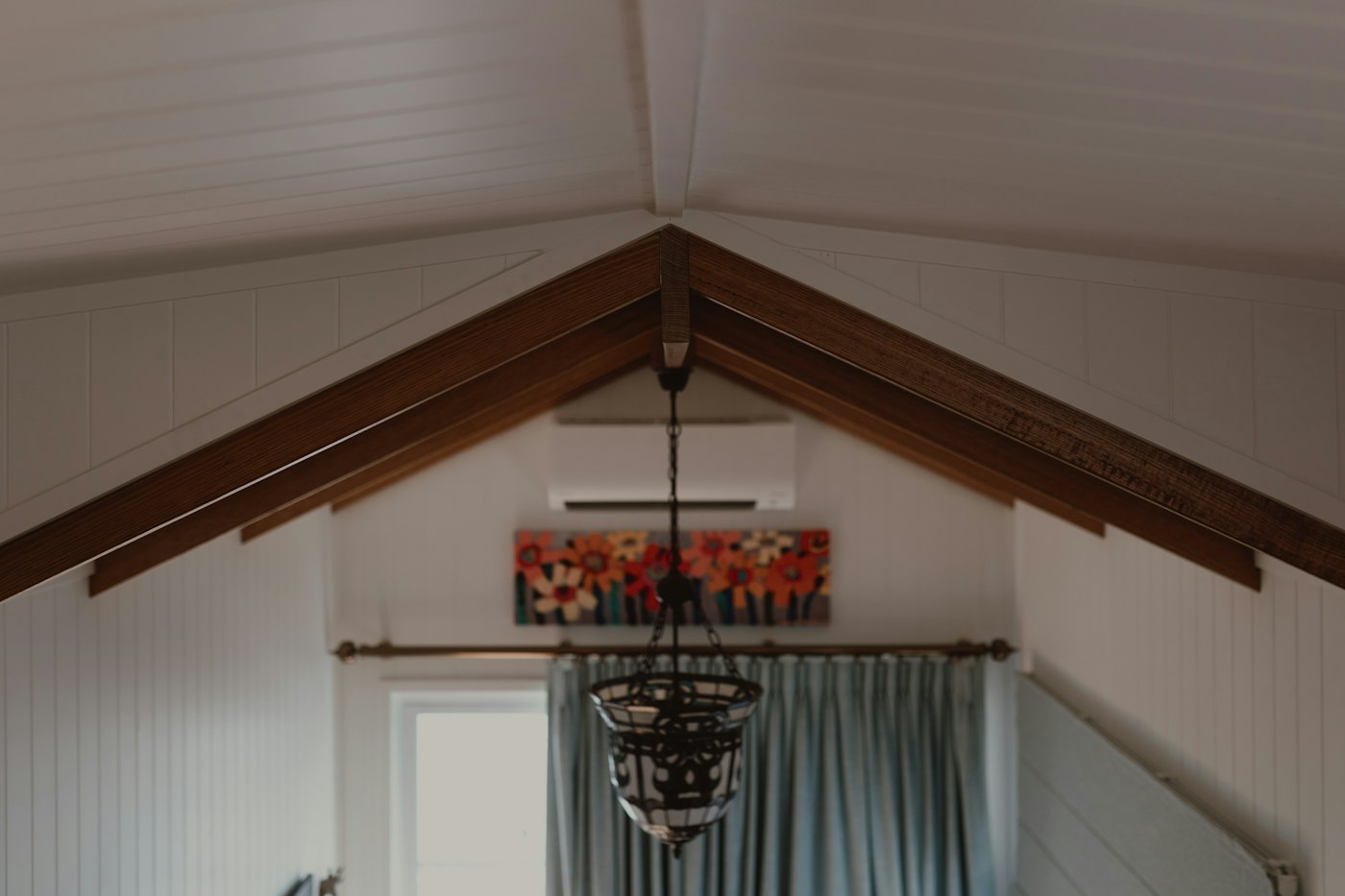
Every house has a room that never quite gets comfortable: the bonus room over the garage, the converted attic, the sunroom, the addition the old furnace was never sized for. For decades the answer was a window unit or a space heater. Ductless mini-split systems have changed that conversation, and they show up in more remodeling plans every year. Here is how they work and where they earn their place.
The basic parts
A mini-split is a heat pump split into two pieces. An outdoor unit holds the compressor and condenser coil. One or more indoor units, often called heads, hold a fan and an evaporator coil. The two are connected by a small bundle of refrigerant lines, a power cable and a condensate drain, all of which pass through a hole in the wall only a few inches across.
Because it is a heat pump, the same system cools in summer and heats in winter by reversing the flow of refrigerant. Most modern units use inverter-driven compressors that vary their speed rather than cycling on and off, which keeps temperatures steady, runs quietly and uses less energy than a system that constantly starts and stops.
Indoor unit styles
- Wall-mounted heads are the most common and least expensive, installed high on a wall.
- Ceiling cassettes sit flush in the ceiling and distribute air in several directions, a cleaner look for living areas.
- Floor-mounted units sit low like a radiator and suit rooms with sloped ceilings or lots of windows.
- Concealed-duct units hide in a soffit or closet and serve two or three small rooms through short ducts, for homeowners who do not want visible equipment.
A single outdoor unit can serve one head or several, with each head controlled independently. That zoning is one of the biggest appeals: a guest room can sit idle while the office stays cool.
Where mini-splits fit best
Additions are the classic case. Extending existing ductwork to a new room often overloads the main system, while a mini-split gives the new space its own equipment. Garage conversions, finished attics and basements, sunrooms and detached studios all fall in the same category.
Older homes with radiators or baseboard heat and no ducts can gain cooling without the enormous job of adding ductwork. And homes with a working central system sometimes add a single head to the room that never cooperates, rather than replacing everything.
What to plan for
The outdoor unit needs a spot with airflow and access for service, placed on a pad or wall bracket. Indoor heads need a location that lets air reach the whole room without blowing directly on a bed or desk, and a route for the condensate drain, either by gravity or with a small pump. Line length and elevation between the two units have limits, so the installer will help pick positions that work.
Each head needs occasional filter cleaning, which is a quick homeowner task. Sizing matters as much as with any system; an oversized unit short-cycles and dehumidifies poorly, so ask for a load calculation rather than a rule of thumb. For efficiency ratings and incentive programs, energy.gov and your local utility are good starting points.
Planning a Mini-Split Into Your Remodel Step by Step
A mini-split is easiest to install well when it is part of the remodel plan from the beginning, rather than added once the walls are painted. These steps help coordinate it with the rest of the project.
- Identify the rooms. List every space that needs heating or cooling and note which rooms are always uncomfortable today.
- Get a load calculation. Ask the heating and cooling contractor to calculate the heating and cooling needs of each room, accounting for windows, insulation and sun exposure.
- Choose head styles. Decide between wall, ceiling, floor or concealed-duct units based on the room’s layout and your preferences.
- Locate the outdoor unit. Pick a spot with good airflow, service access and minimal noise impact on bedrooms, patios and neighbors.
- Plan the line set routes. Decide how refrigerant lines and drains will run, whether inside walls during the remodel or in a tidy exterior cover.
- Coordinate electrical work. The outdoor unit needs its own circuit and a disconnect. Plan this with the electrician.
- Finalize controls. Choose remotes, wall controls or app-based controls for each zone.
Living With a Mini-Split
Mini-splits behave differently from central systems, and a few habits help you get the most from them.
- Set it and leave it. Inverter systems work most efficiently holding a steady temperature rather than being turned off and on.
- Clean the filters. Rinse the washable filters in each head regularly, more often in homes with pets or dust.
- Keep the outdoor unit clear. Trim plants, clear leaves and keep snow and debris away from the coil.
- Watch the drain. If water drips from an indoor unit, the condensate line may be clogged.
- Schedule service. Have a professional check the system periodically, clean the coils and confirm refrigerant levels.
- Use the modes. Many units have a dry or dehumidify mode that helps on humid days.
Common Mistakes
- Oversizing. A unit that is too large for the room cools quickly but does not remove enough humidity.
- Poor head placement. A head blowing directly on a bed, sofa or desk can be uncomfortable. Place it to sweep the room.
- Ignoring the line set appearance. Lines running up the outside of the house look better in a painted cover or hidden in a wall.
- One head for too many rooms. A single wall unit will not reliably condition rooms behind closed doors.
- Skipping the condensate plan. Drains need to slope properly or use a pump.
- Putting the outdoor unit in a bad spot. A unit tucked under a deck, beside a bedroom window or where roof runoff pours onto it will be noisier, harder to service and more likely to have problems over time.
Questions Homeowners Ask
Do mini-splits work in cold weather?
Many modern models are designed to heat effectively in cold temperatures. Check the manufacturer’s rated performance for your climate.
Can a mini-split replace our central system?
In some homes it can, with heads in multiple rooms. In others, it works best as a supplement.
Are they noisy?
Indoor heads are generally quiet, and outdoor units are often quieter than traditional condensers. We are glad to help you plan heating and cooling that fits your remodel.